1558 Libellus de Sphaera, Johannes de Sacrobosco. Also, 1560 Quaestiones, Beyer
$1,599.99
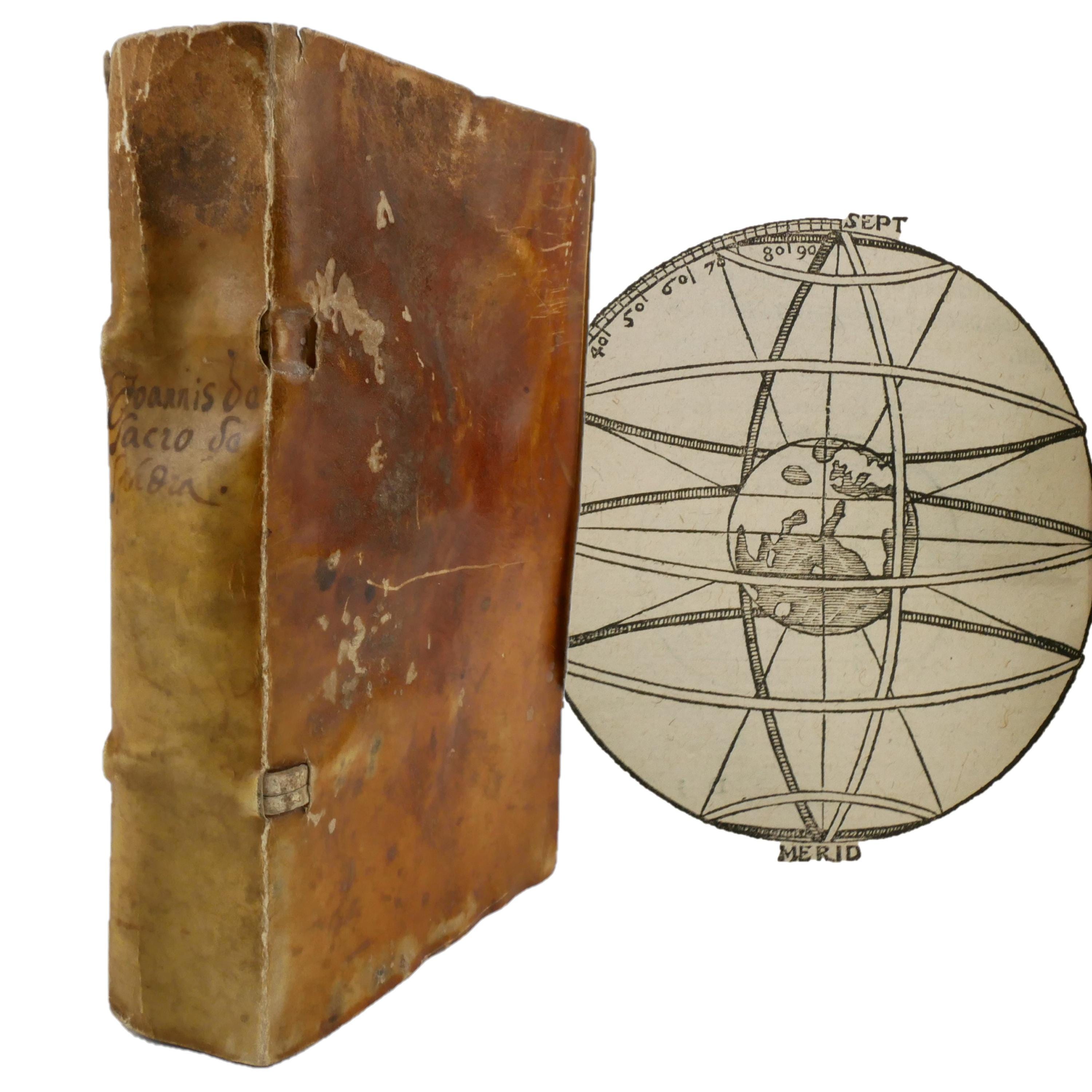
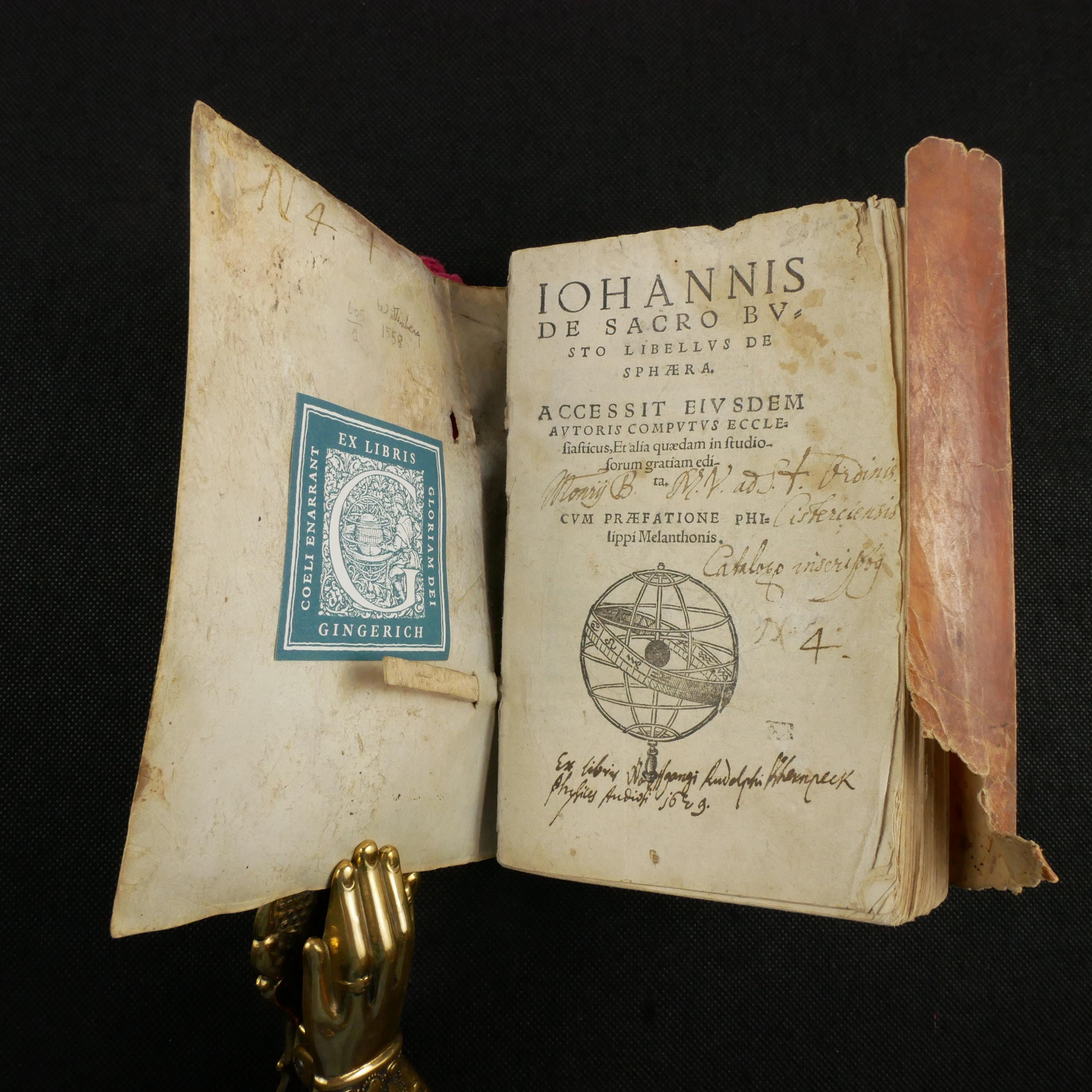
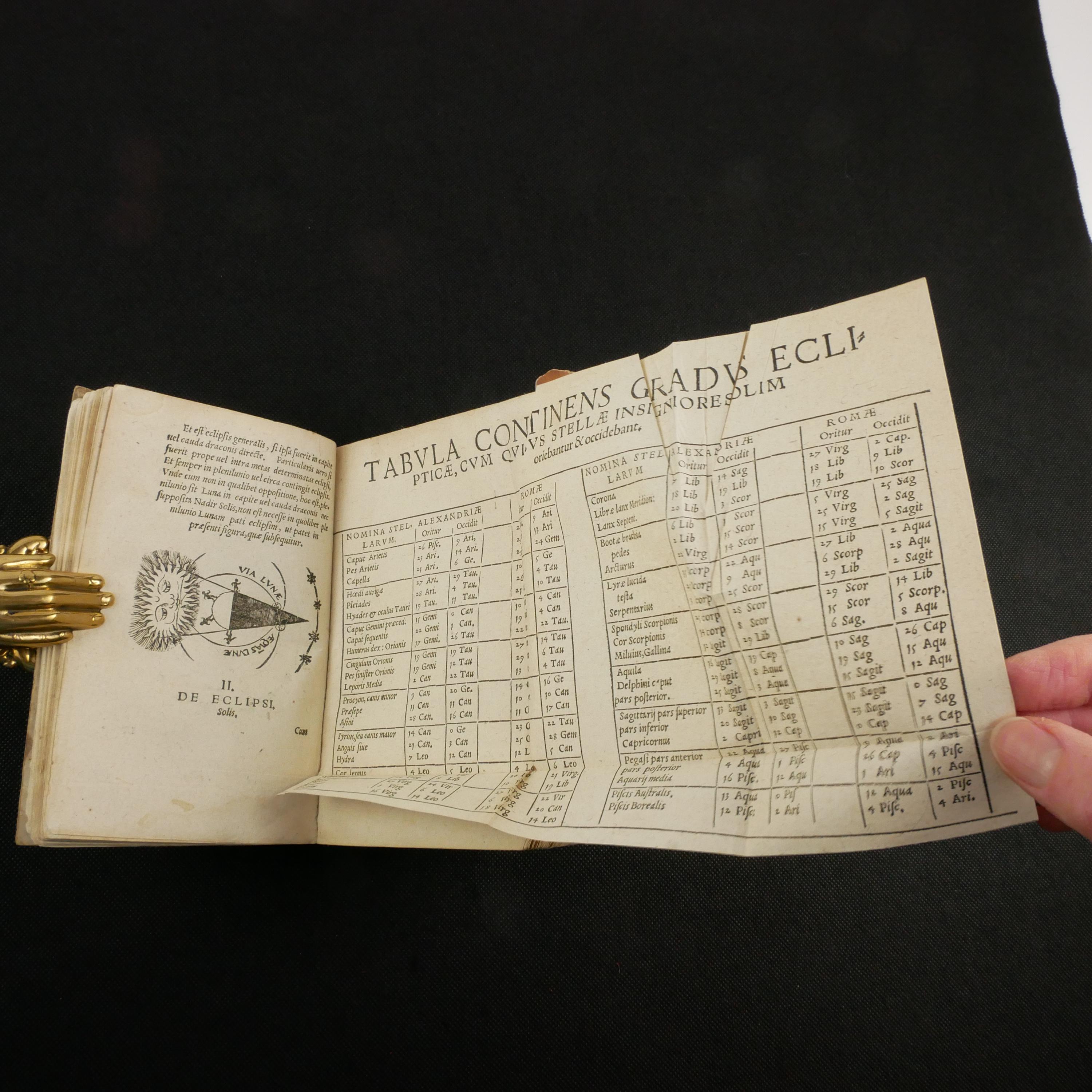
A remarkable survivor, clearly a student's copy of Sacrobosco's Libellus de Sphaera, printed in 1558, with the student's inscription at the bottom of the title page, and a question and answer styled study guide bound at the rear (1560, by Hartmann Beyer). The shared shelfmark from the title page to the binding indicates the wallet-style binding may be contemporary to the book. Also, this copy still retaining its broadside with the locations of the sun updated (since the 365.25 days per calendar year causes yearly drift in the location of the sun by day, since the true day is slightly shorter).
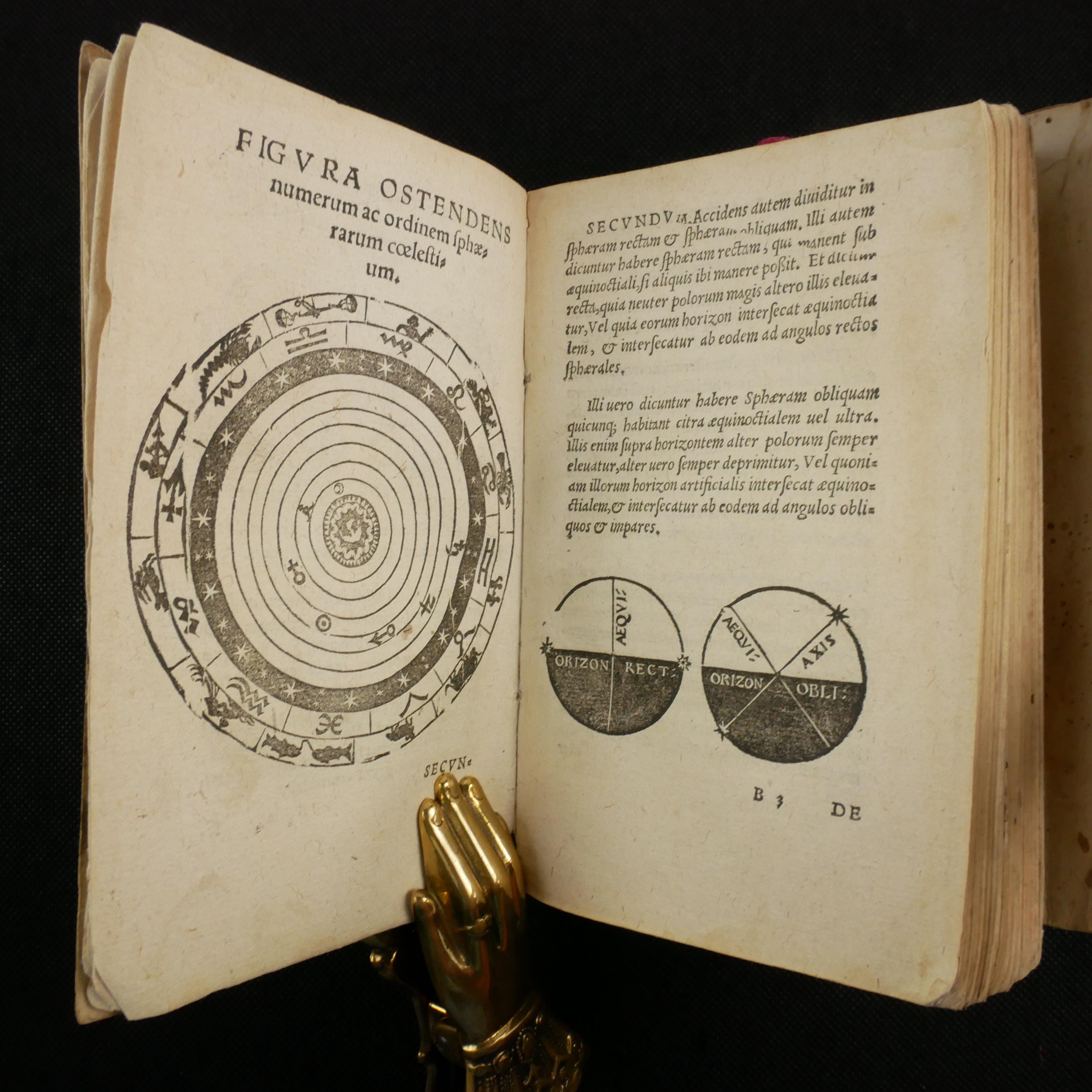
Sacrobosco's work was first produced around 1230, a text book dedicated to spherical astronomy. Although Sacrobosco did use the Earth as central to all rotation, his methods of finding the locations of stars, the sun and moon based on elliptical patterns was fairly reliable and became the standard of students for centuries to come. He also correctly identified the world as a sphere. By 1558, the idea of the Earth as the center of the universe was largely dispelled, but Sacrobosco's calculations and tables were so good that they were yet to be replaced, so academies were updating to accommodate the new science.
This copy has the commentary and editing of several 16th century scholars, Philip Melanchthon and Erasmus Reinhold, as well as a second book with commentary of Hartmann Beyer.
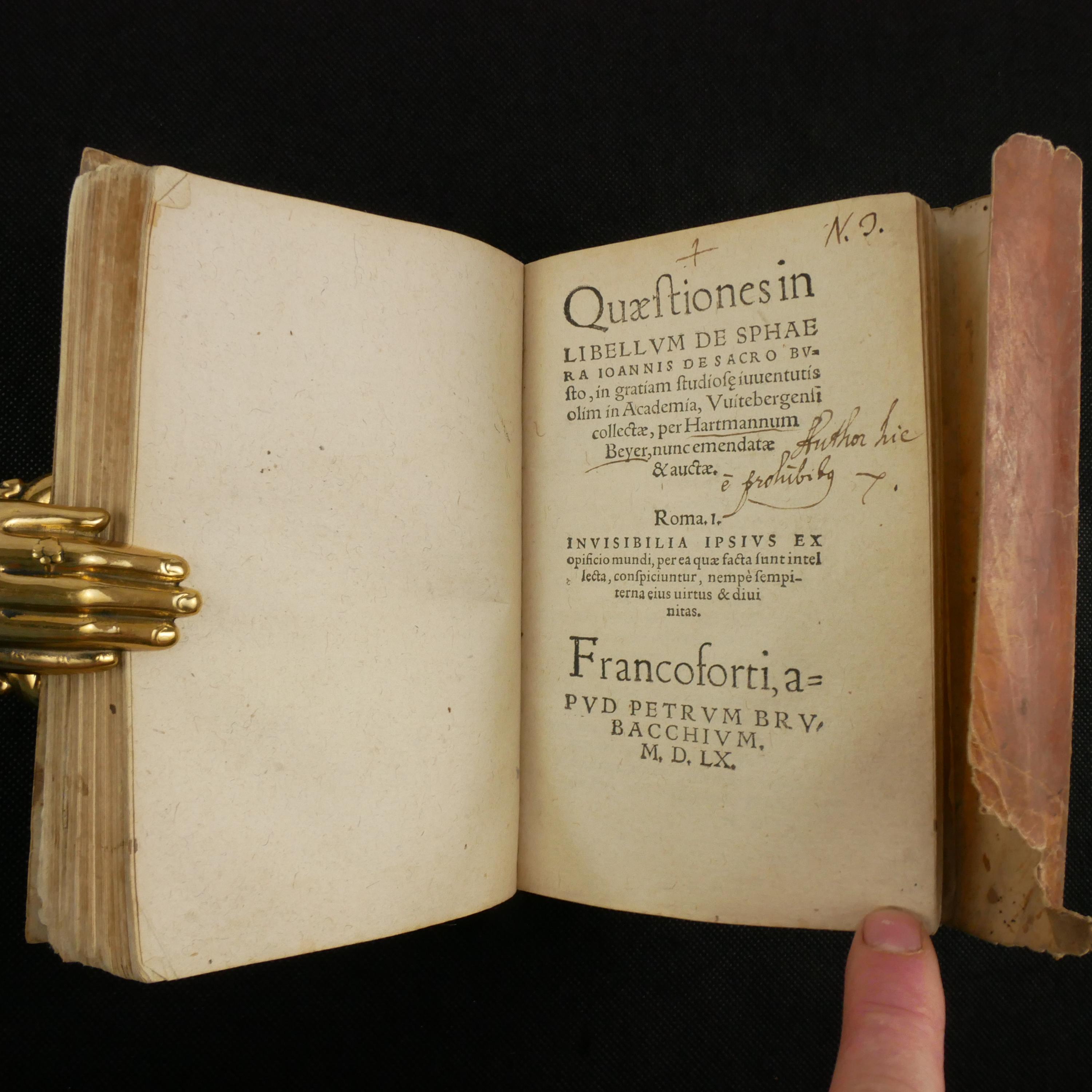
The university usage of this copy is clear, and to be noted. The scholar, one Wolfgang, notes at the bottom of the title page that he is studying physics. The 17th century date of study denotes that an older book was still acceptable in studies. Yet, despite the later date, the binding contains both the 1558 Sacrobosco, and (essentially) a 1560 study guide, posing the question, "Has this book been used for study before Wolfgang wrote in it?", which seems likely. One scholar wrote extensive marginal notes in the second book, the study guide of Beyer.
A mystery is the Cistercian monastery also holding the work. It's possible the "S.T." refers to St. Thomas, which was a Cistercian monastery in the Kyll Valley that survived until the Napoleonic wars. Did they possess the book before or after Wolfgang? Or, was it from a different Cistercian monastery that was dissolved during the protestant reformation years leading up to Wolfgang's study?
The Cistercians wrote that Beyer was a prohibited author, on the title page of his work. Beyer joined the prohibited list in 1559, so it doesn't help illuminate what period the Cistercians owned the book in.
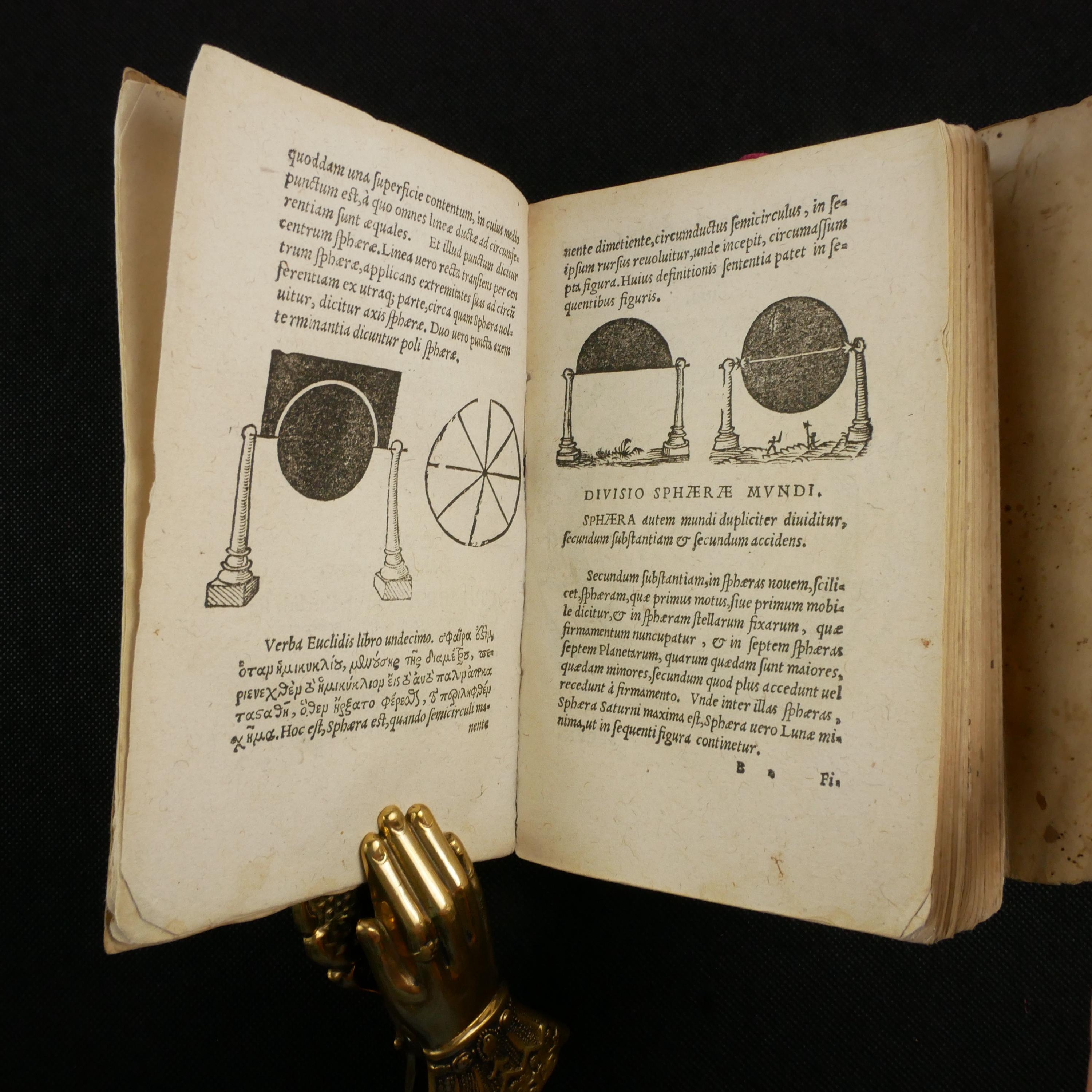
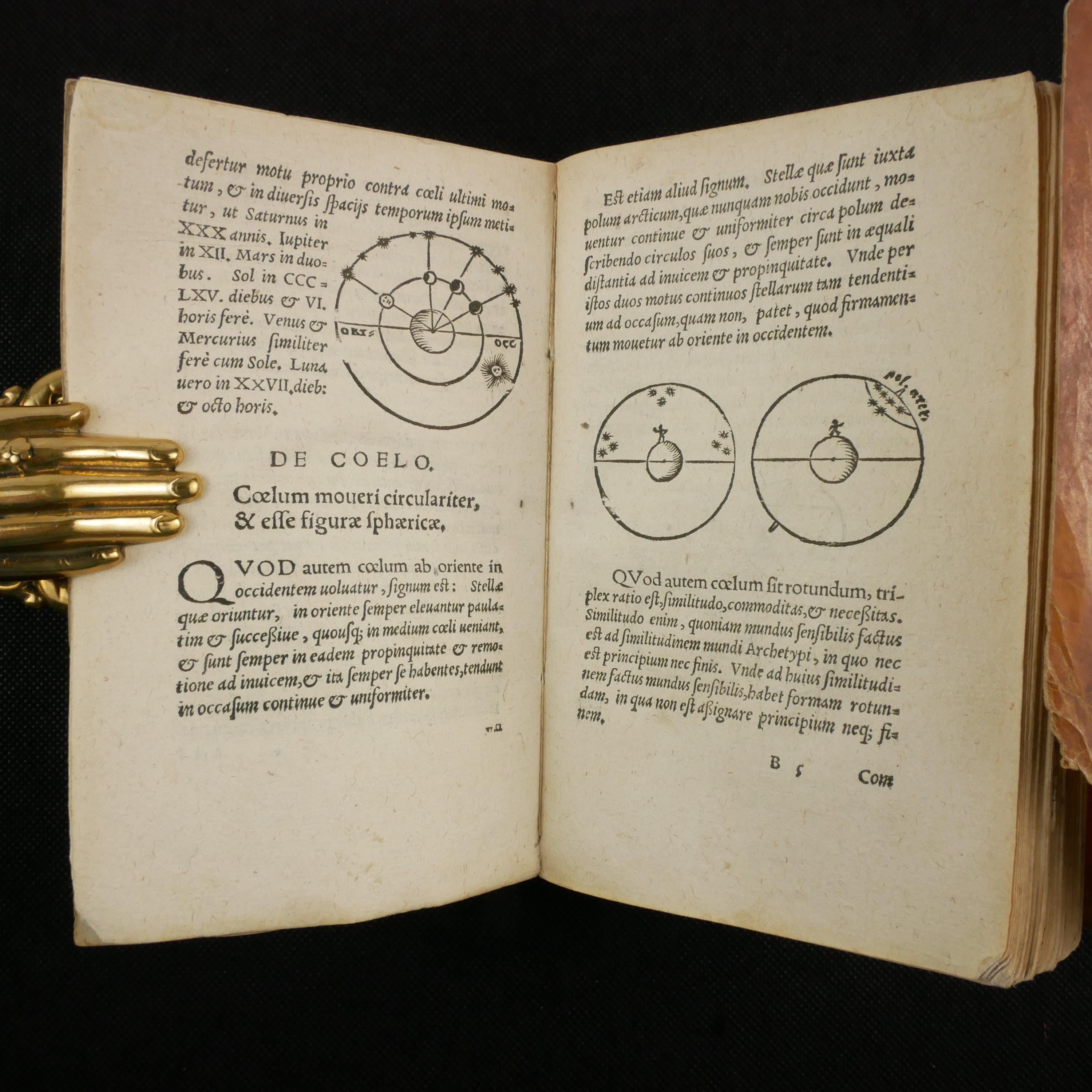
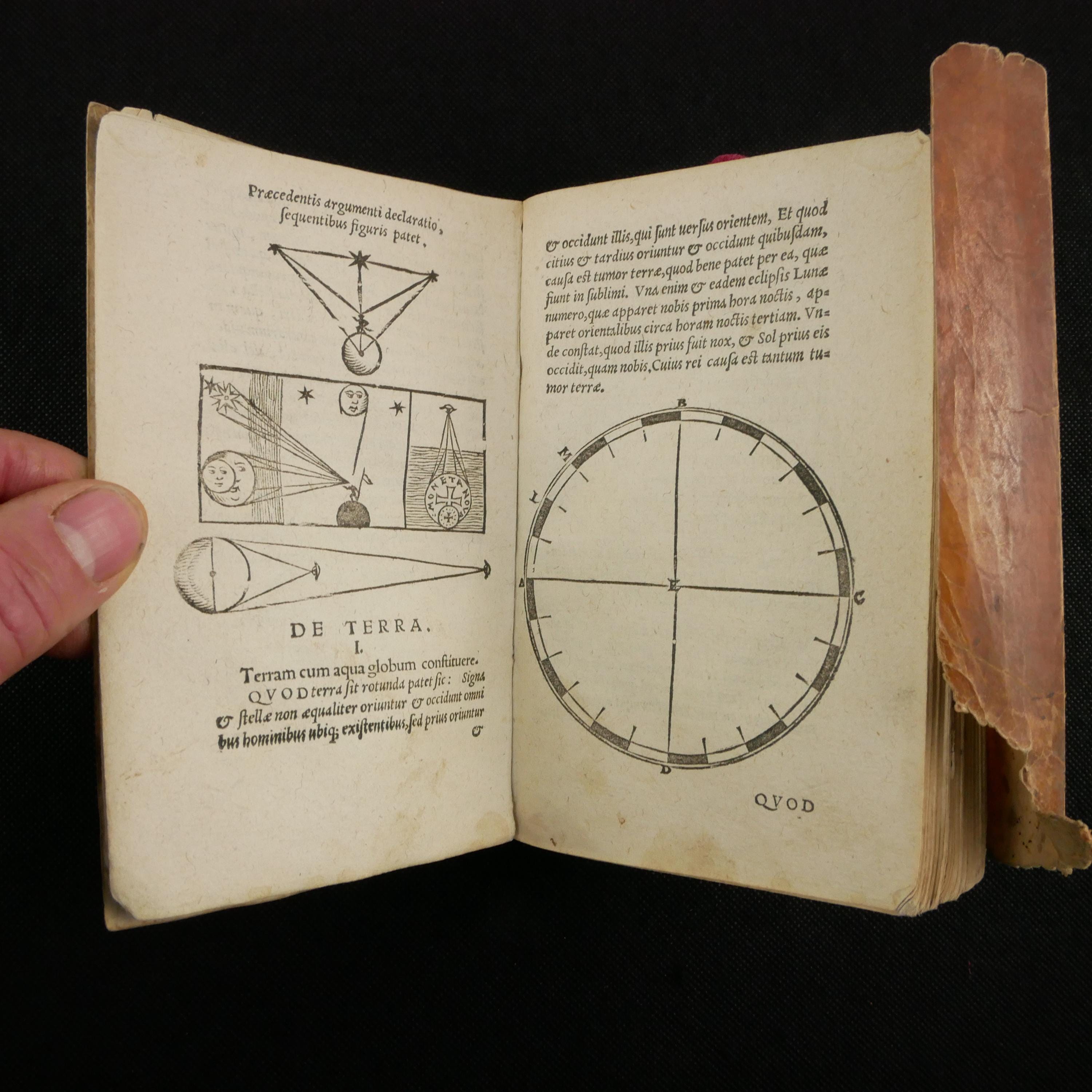
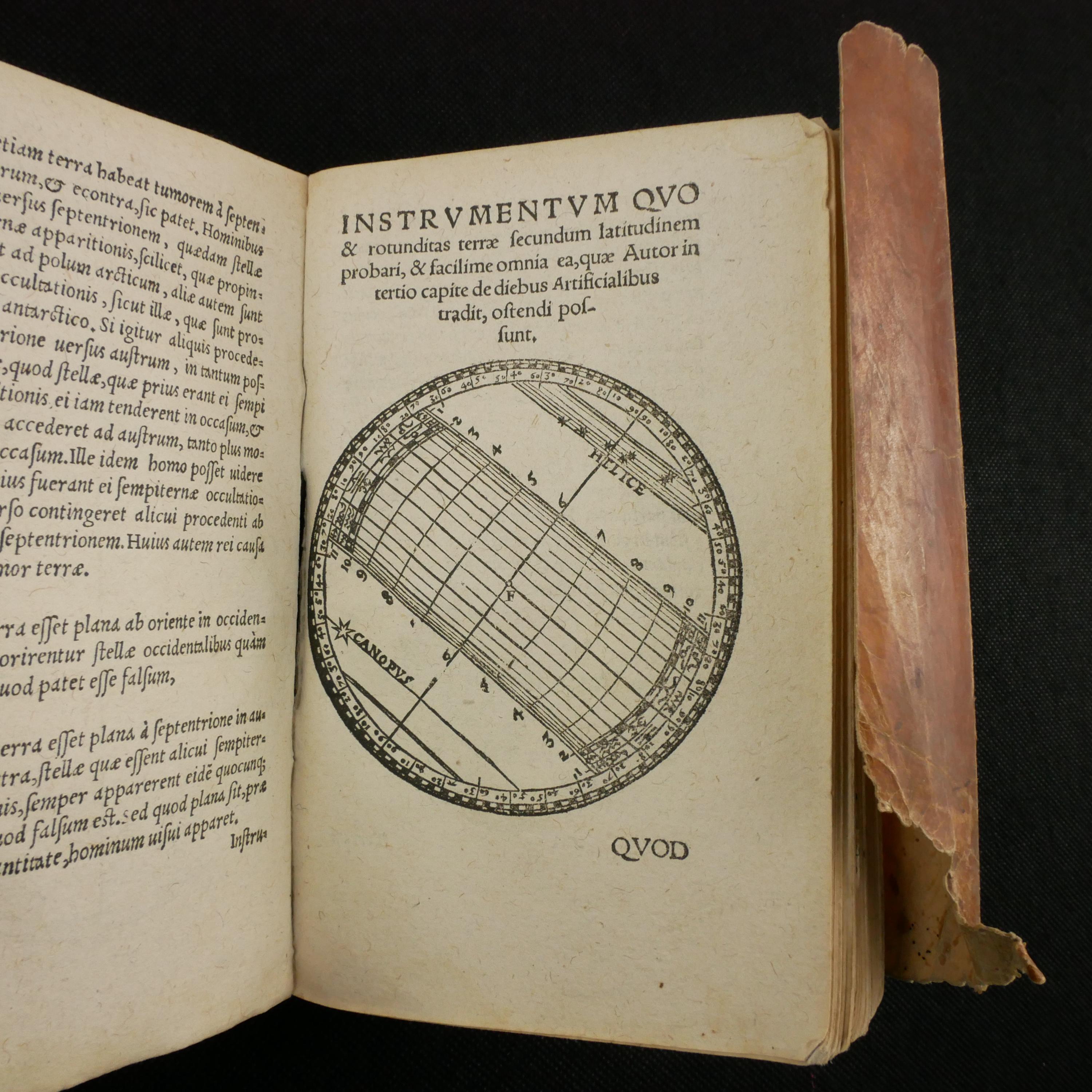
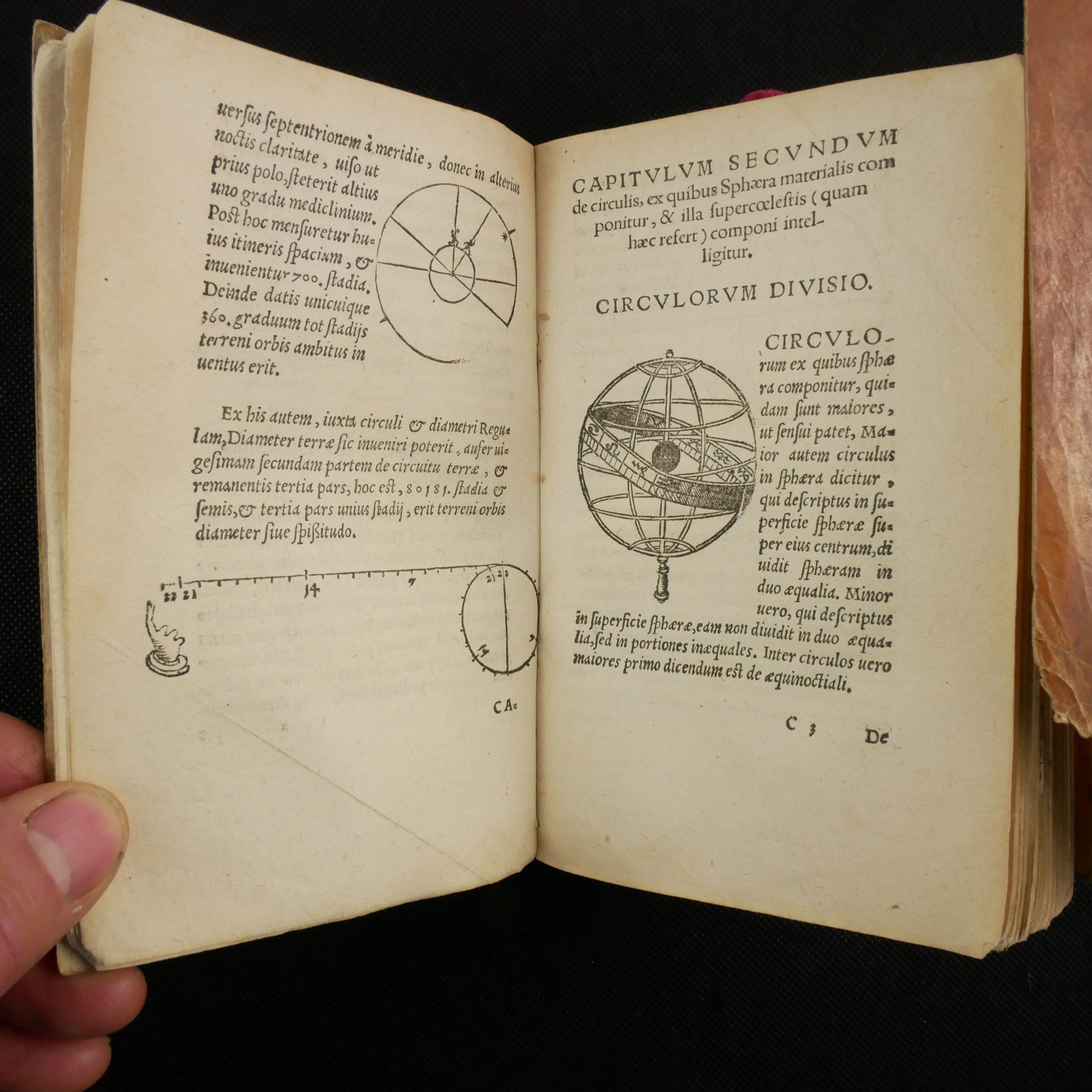
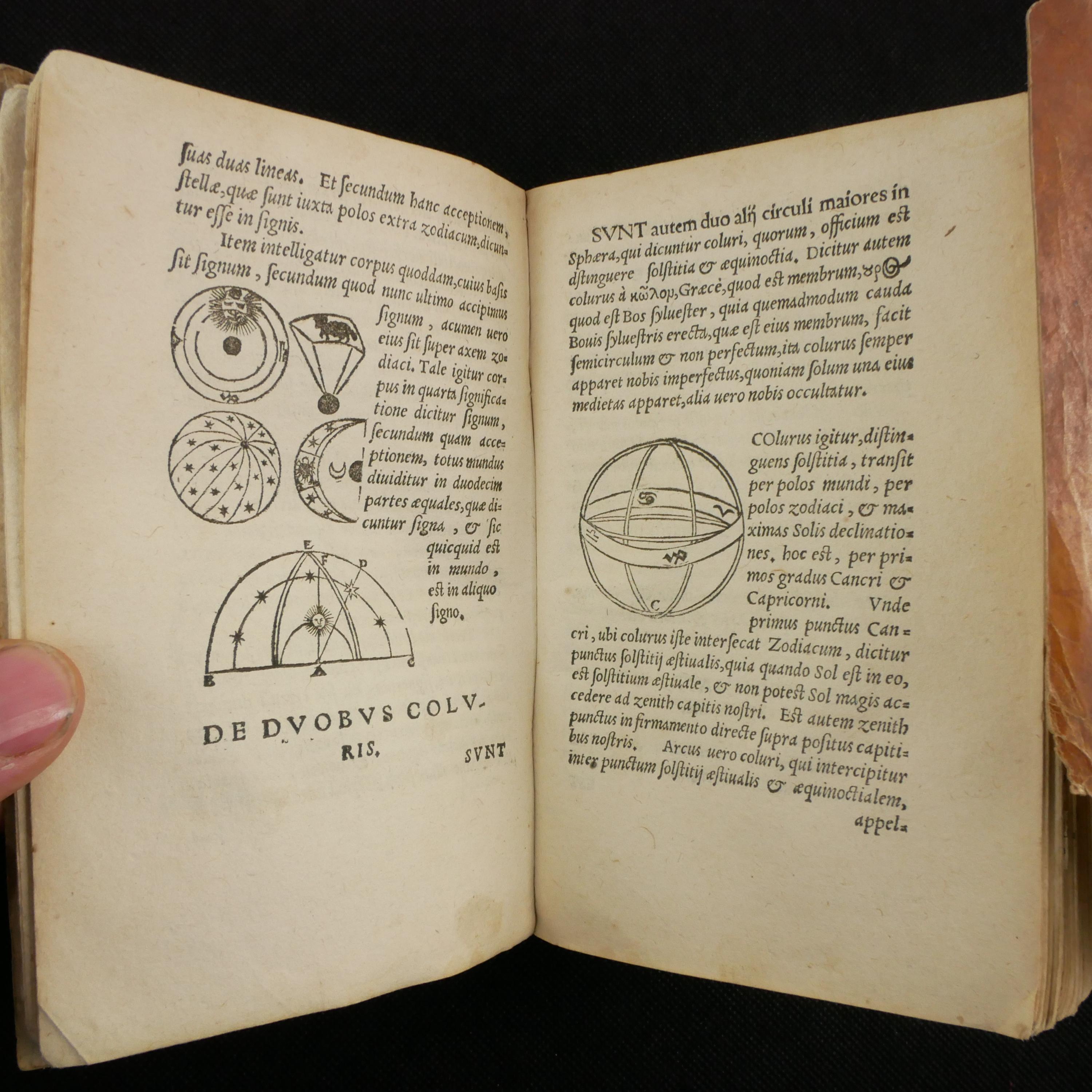
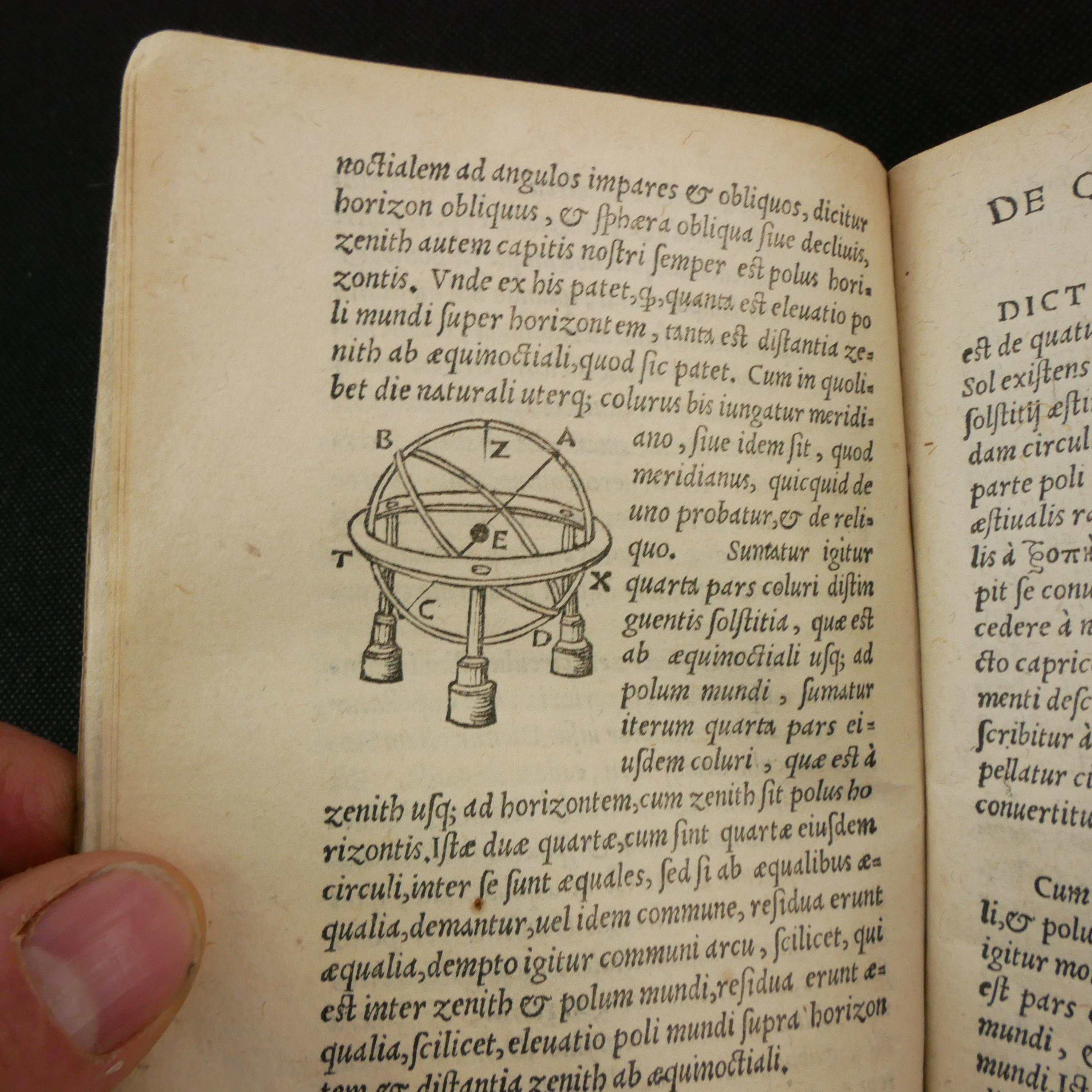
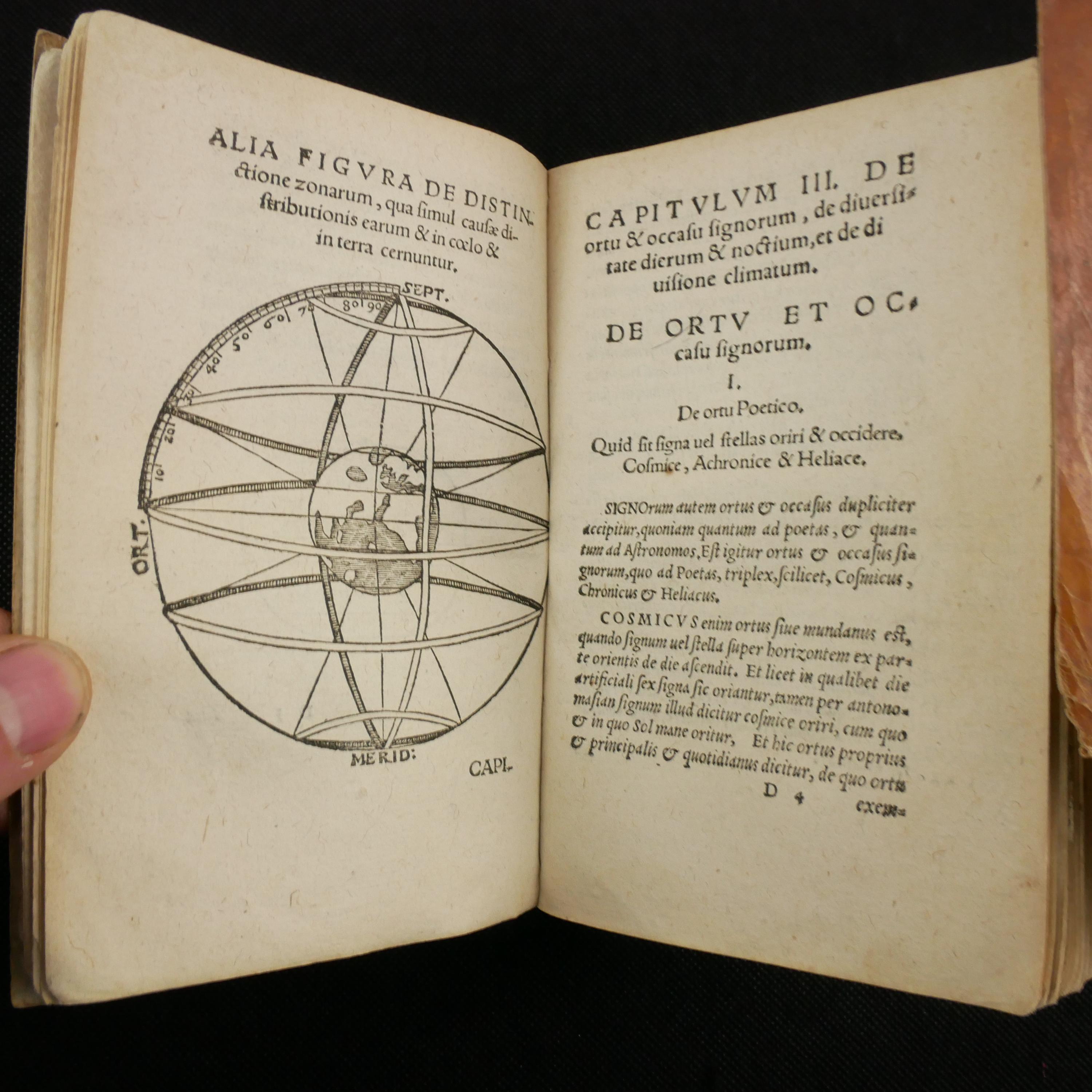
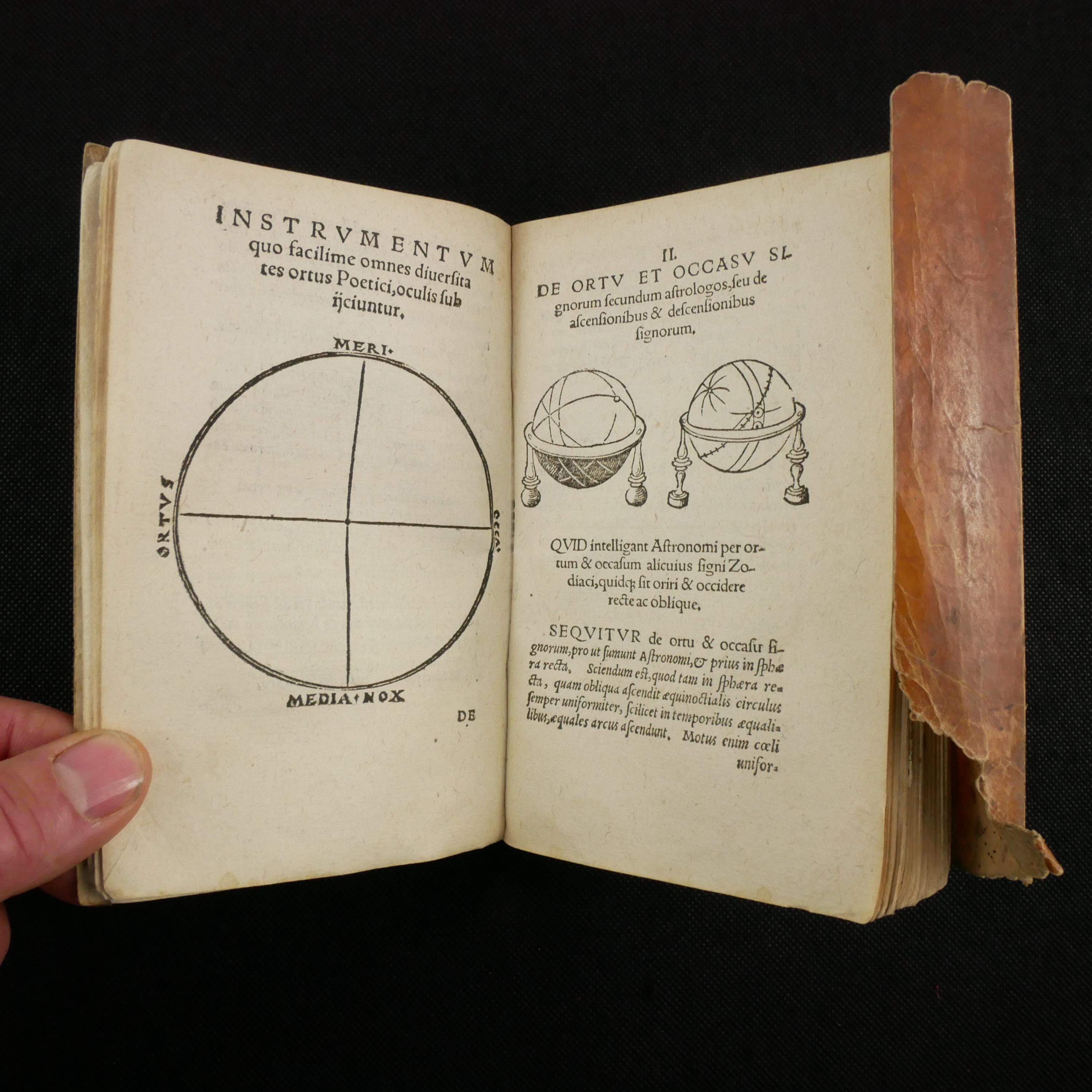
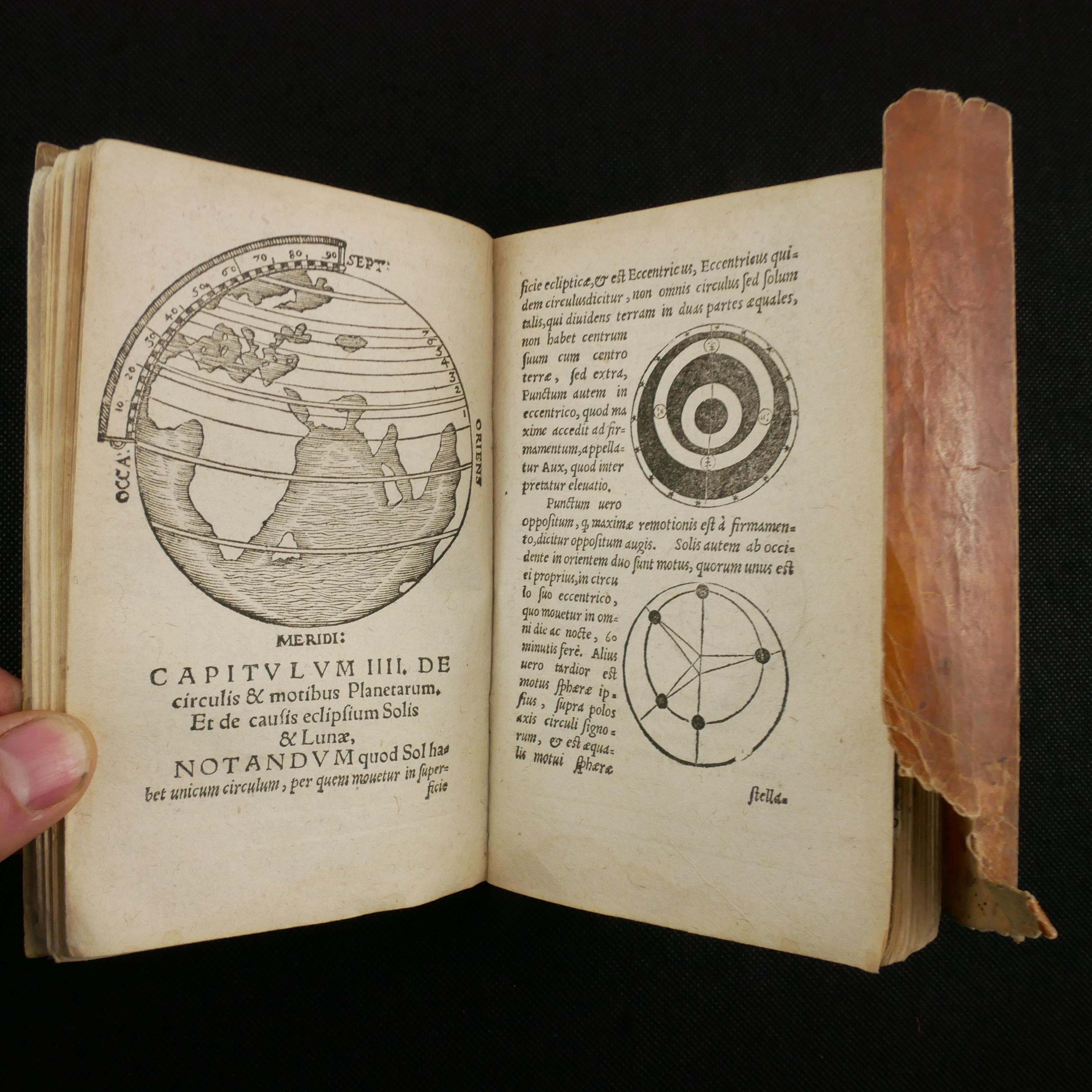
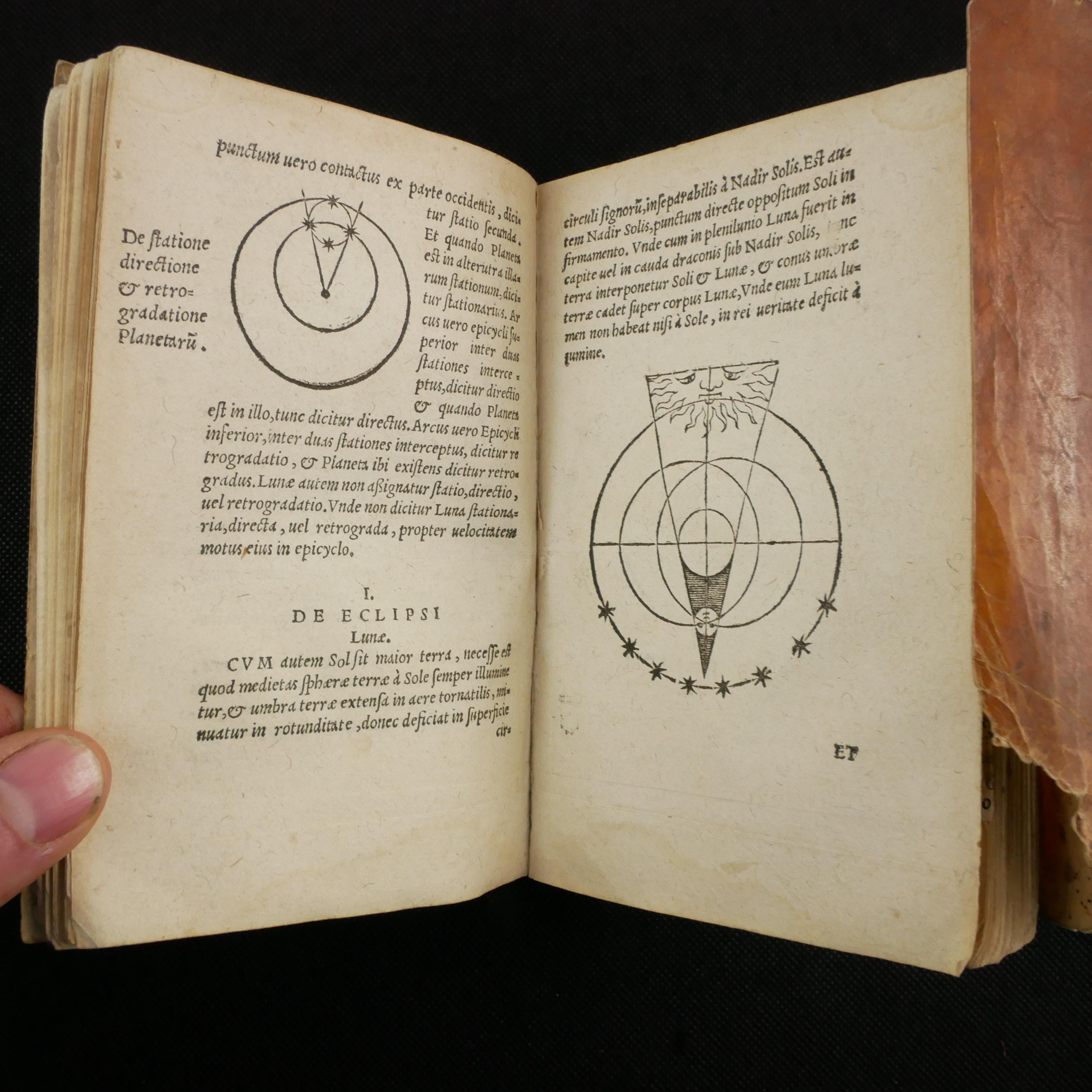
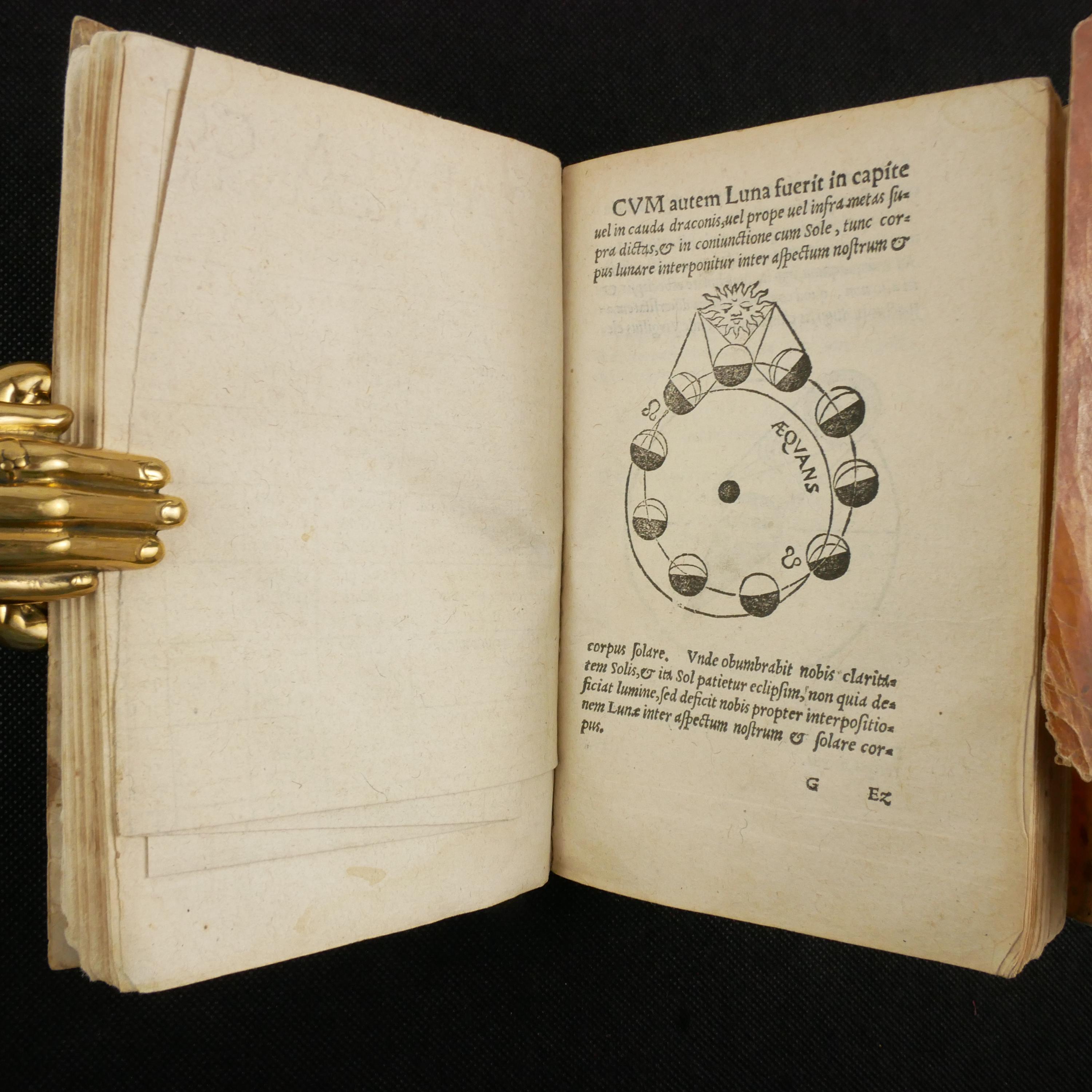
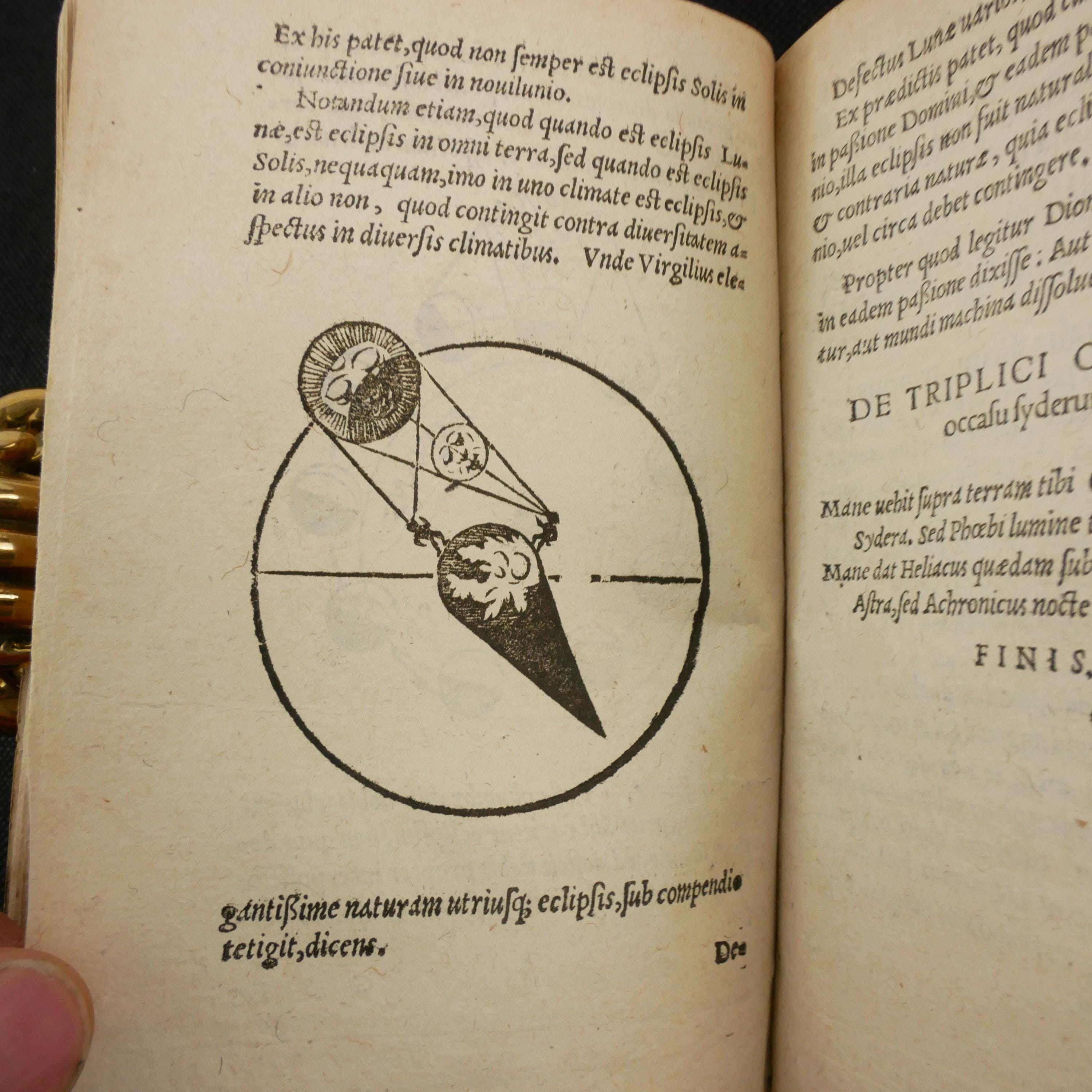
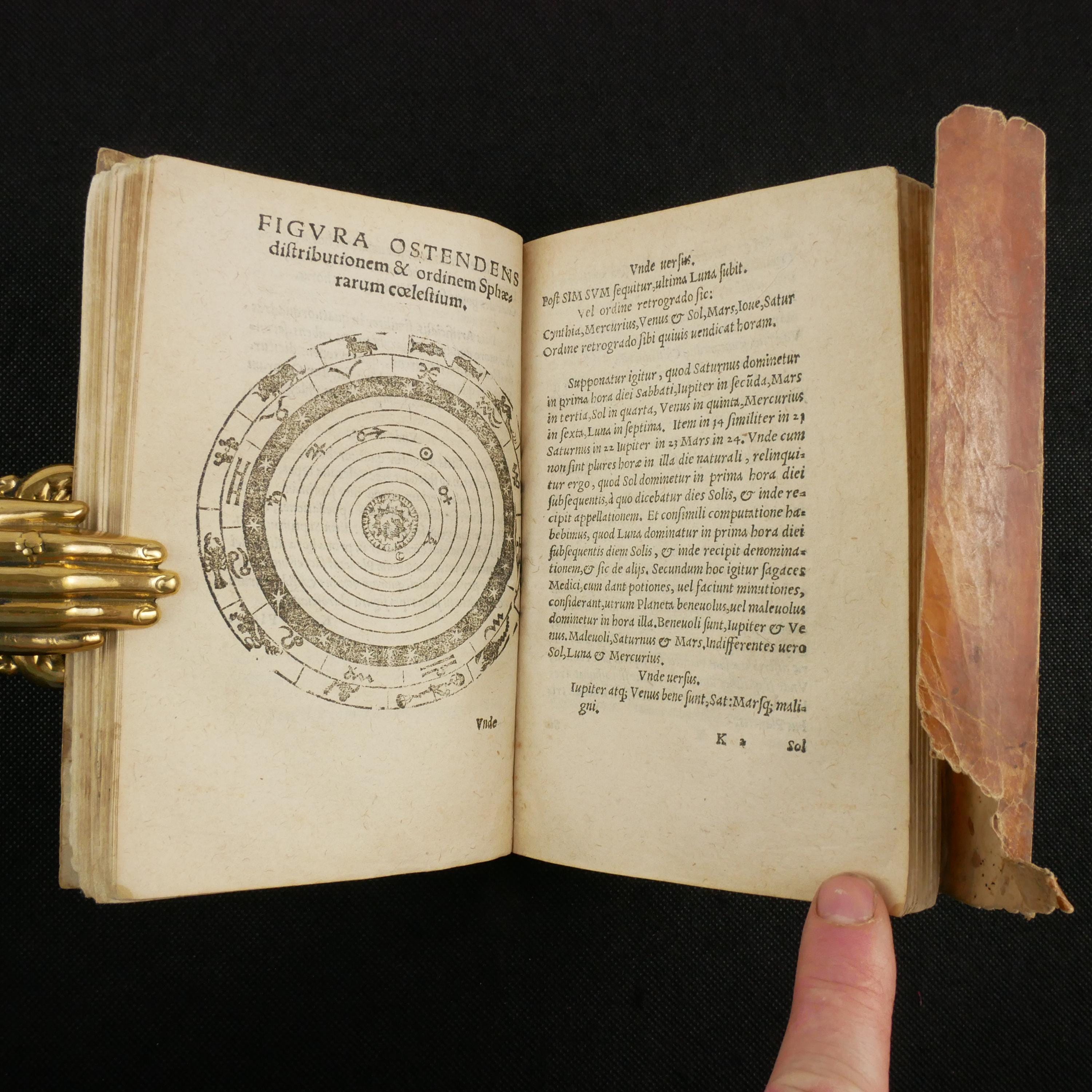
Much like textbooks of today, Sacrobosco's work (and this edition of Krafft) is filled with engaging diagrams and illustrations which would aid the student in their learning.
Sacrobosco's text also includes his Libellus de Anni Ratione, where he criticizes the Julian calendar and proposes reforms adopted by the Gregorian calendar in 1582.
Provenance -
We already noted the student and Cistercians, but also the Harvard astronomer and historian Owen Gingerich's ex libris is found in this copy.
Bibliographic Details -
1558 Sacrobosco - Universal Short Title Catalogue (USTC) number 668014, 6 copies recorded in the world's libraries.
1560 Quaestiones... - Universal Short Title Catalogue (USTC) number 689026, 5 copies recorded in the world's libraries and USTC 689025, recording four more copies.
Physical Attributes -
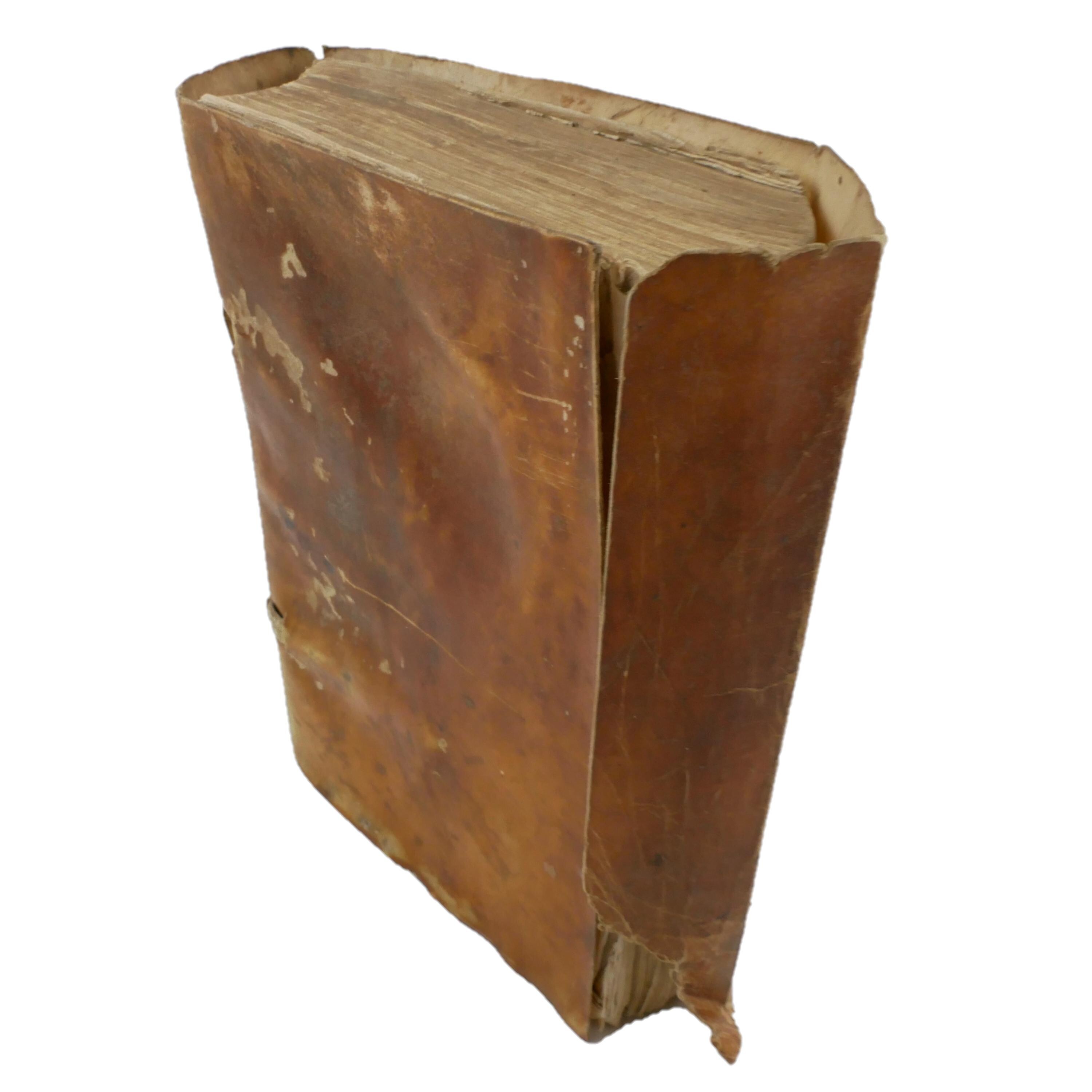
Measures approx. 15 x 9 x 3 cm. Vellum wallet-style wrapper. Spine with two bands. Spine with author/title in old hand. Sacrobosco's work is illustrated throughout, some with diagrams that could be used as the base for moving parts.
Sacrobosco -
Pages - Not paginated
Collation - A-R8, with last two blank leaves present. Collates complete.
Beyer -
Pages - xxxii, 302, 2 blank pages (last leaf blank)
Collation - aa8, a8, b-u8, collates complete.
Condition -
See pictures. Wallet-style vellum binding with wear and cockling (waviness). Bottom of flap corner chipped away. Top front strap missing from binding to text block, causing looseness (still connected in back). No pastedowns used. Matching library number to title page written on front board inner, as well as bookseller notes of date/publication and ex libris of Gingerich. 1st gathering almost loose, chipping to top edge. Title page heavily annotated with two ex libris. One is the library of a Cistercian monastery, and the other is of an early 16th century student. The title page has heavy toning and some chipping along edges. Bottom corner of front of text block dog eared. Throughout text block there is use consistent with student usage. Occasional thumbing, dog-eared corners, annotations, page-edge chips/tears, fox spots, candle ember marks, etc. Occasional moisture mark from edge, second half from upper corner, worst at last page. Occasional faded page, E gathering ink light.
Shipping from United States
Processing time
1-3 business days
Customs and import taxes
Buyers are responsible for any customs and import taxes that may apply. I'm not responsible for delays due to customs.
Payment Options
Returns & Exchanges
Returns accepted within 14 days
Buyers are responsible for return shipping costs. If the item is not returned in its original condition, the buyer is responsible for any loss in value.
Conditions of return
Buyers are responsible for return shipping costs. If the item is not returned in its original condition, the buyer is responsible for any loss in value.
Privacy policy
We do not collect any private information. For billing, Etsy provides the service. We only receive notice that payment was made. The shipping address is provided to us by Etsy, based on what they buyer submitted during check-out. We do not store these addresses. That is the extent of the information that we receive during a transaction.