

16th century provenance. 1545 Divi Alphonsi Romanorum Hispaniarum Regis Astronomicae Tabulae. Astronomy.
$3,994.99
A remarkable copy of the Alfonsine star tables (this edition, 1545), with corrections and commentary from important 16th century astronomers, and manuscript inscriptions that place it in the hands of a knowledgeable scholar within the hub of German astronomical research. Beyond the science, the preserved original binding, made of Catholic manuscript waste, serves as a tangible artifact of the religious turmoil of the 16th century.
In the printed work, star tables of medieval times are corrected by the leading astronomers of the period, but not incorporating Copernicus' revelations.
In addition, an annotator, likely from the German center of astronomical study, makes three inscriptions touching on the history of astronomy, astronomies 16th century application (astrological) and controversies of the period that were spurring theory development (and science, as a whole).
Of special note, there are three manuscript annotations within this 1545 astronomy book that link this copy of the book to the Wittenberg circle of astronomers; Owen Gingerich (Harvard professor, author, historian, astronomer, bibliophile, etc.) left a 1993 note (loose, tucked in the book) that he felt compelled to compare these annotations to Erasmus Reinhold's handwriting because they bear such striking resemblance, but ultimately he decided they were not Reinhold's.
Many manuscript works have been scanned and placed online since 1993, so I perused Reinhold manuscripts and came to the same difficult conclusion; despite much similarity, there are little differences which ultimately lead to the same conclusion, that Reinhold didn't write these annotations. For example, Reinhold's scanned manuscripts contain the word "Lunaris" multiple times, which he always wrote in a different spacing/break manner than this copy's example.
What I can tell you about the manuscript annotations:
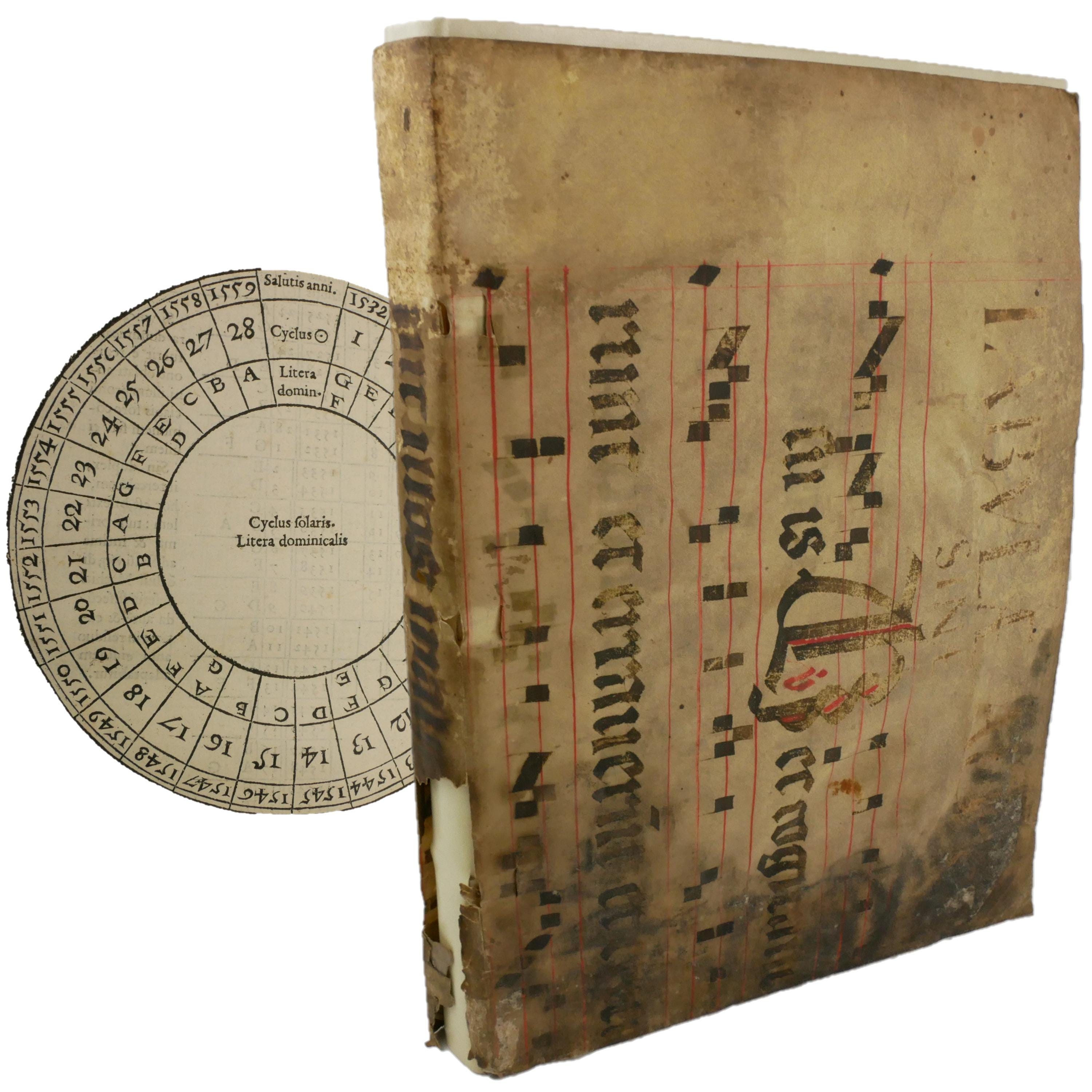
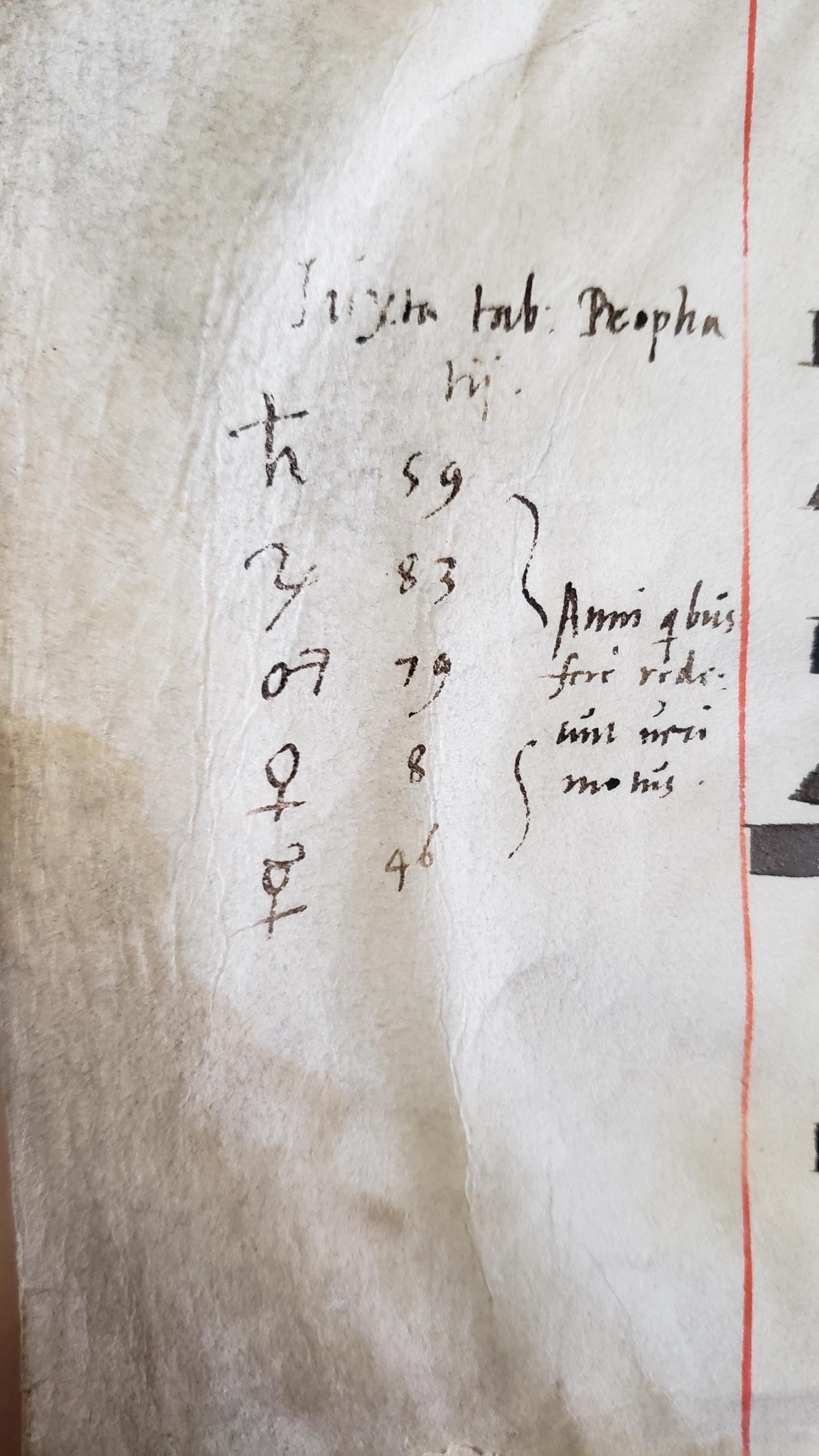
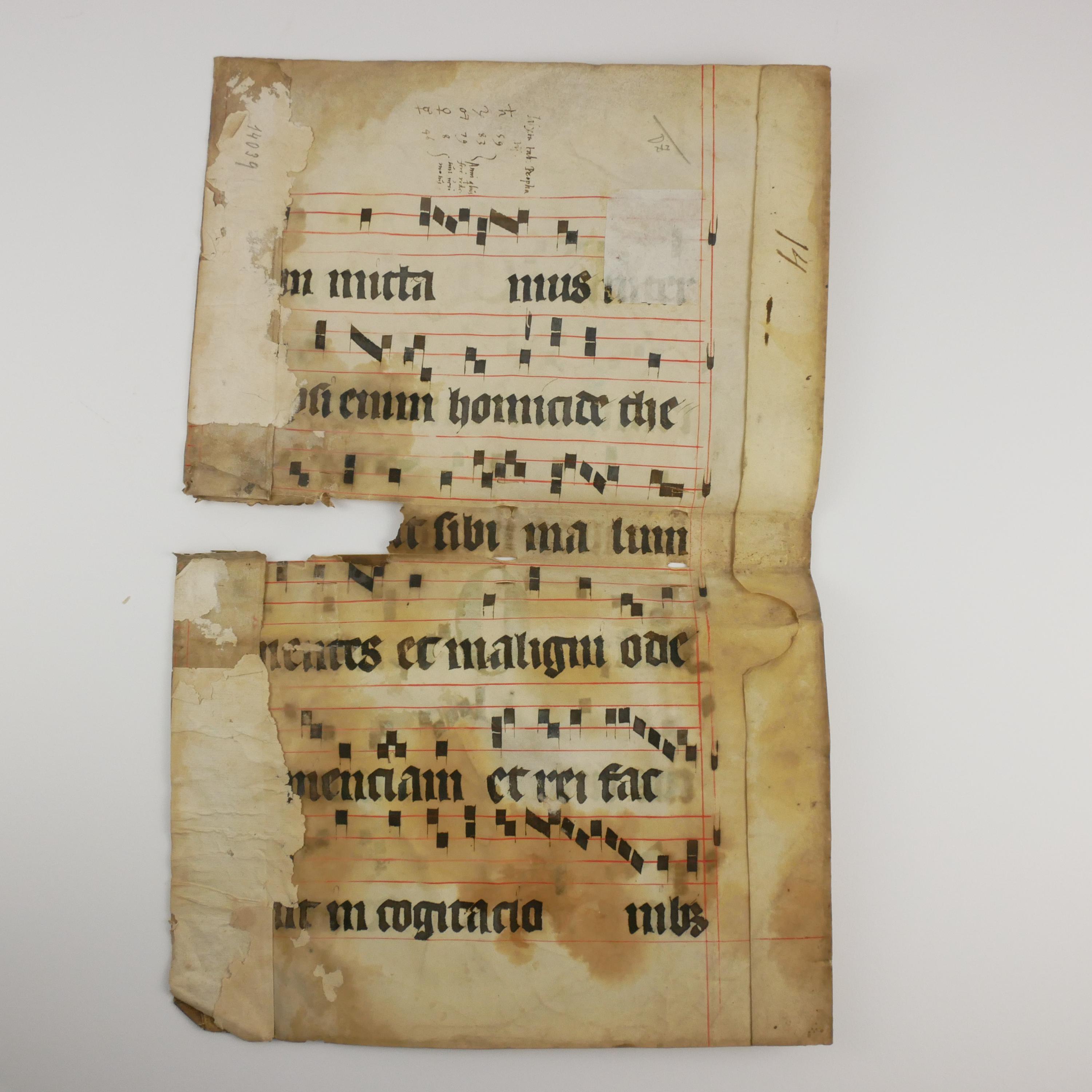
On the original vellum binding, someone wrote a small table with the planet symbols and the number of years until they return to (roughly) the same position in reference to the Earth ("Anni quibus fere redi-tum veru'(m) motus"). The annotator revealed high-level scholarship, stating that the information was "Juxta tab. Prophatii.", referencing the years to the 13th century Jewish astronomer Prophatius, who included the planet cyles in his works.
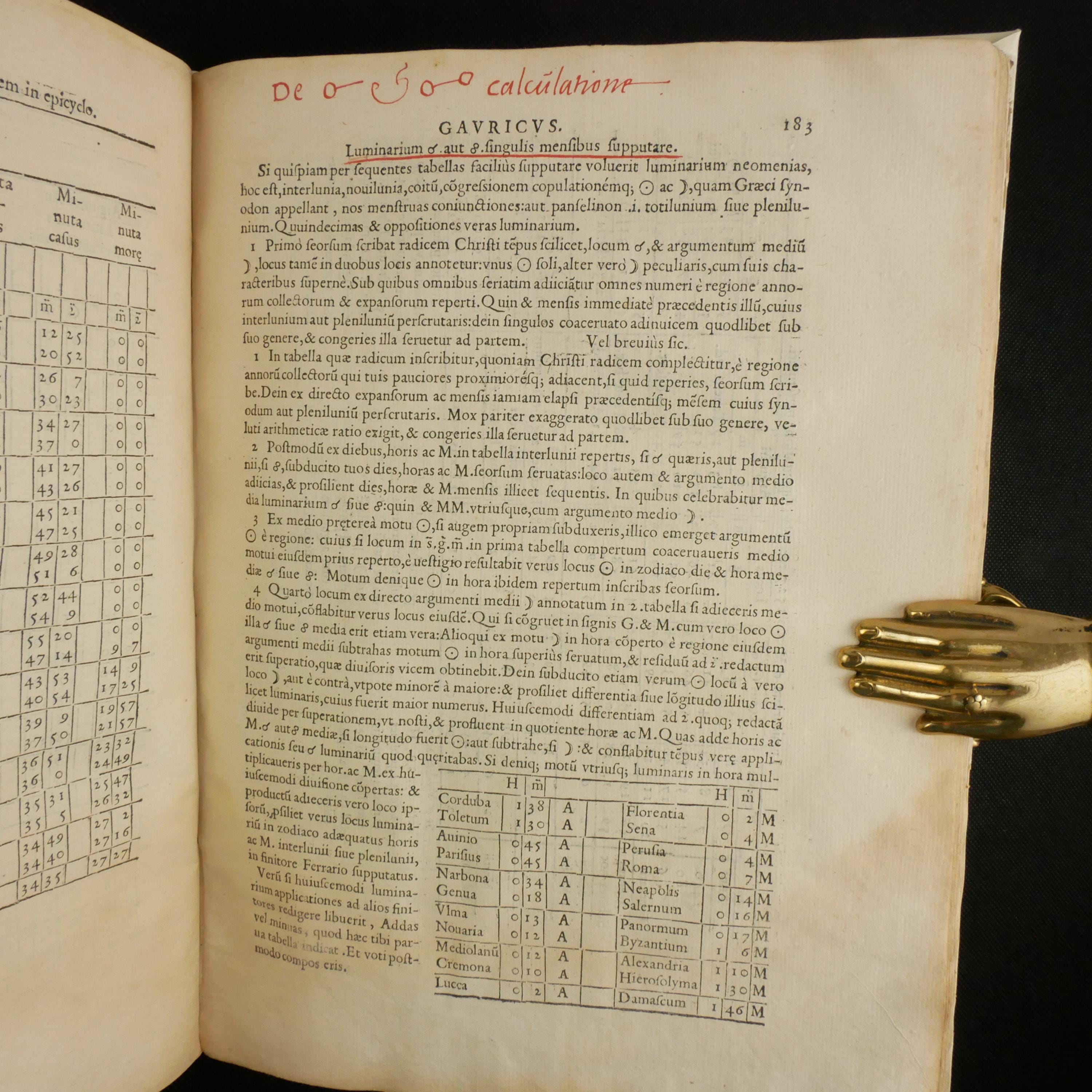
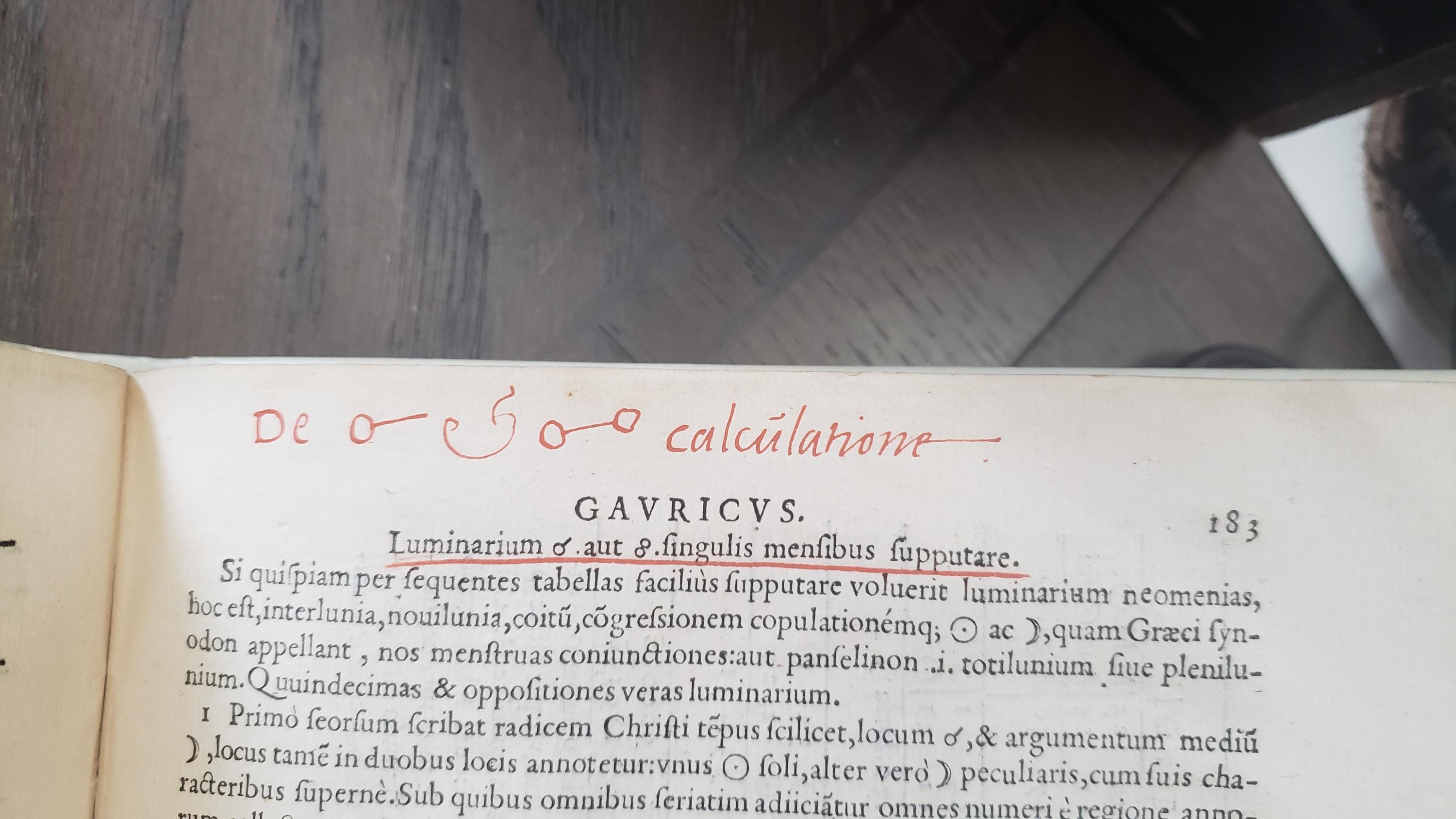
The annotation on page 183 holds a few revelations. The annotator followed the example of Reinhold, with a red header and underlining (rather than black). The very neat hand harkens back to the earlier 16th century writing style, rather than the later, more hurried, writing. The unique "et" might be a key in revealing the annotator's identity.
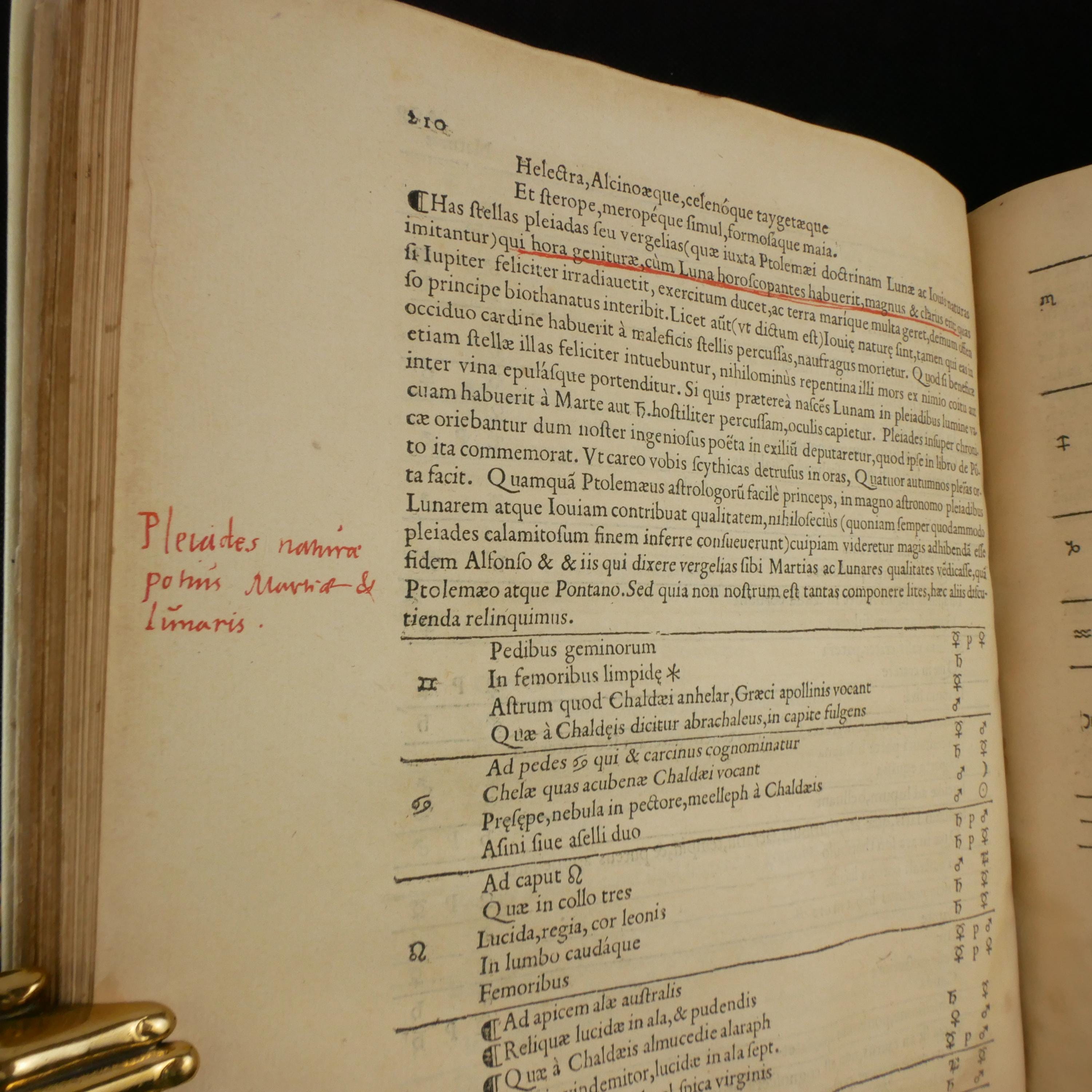
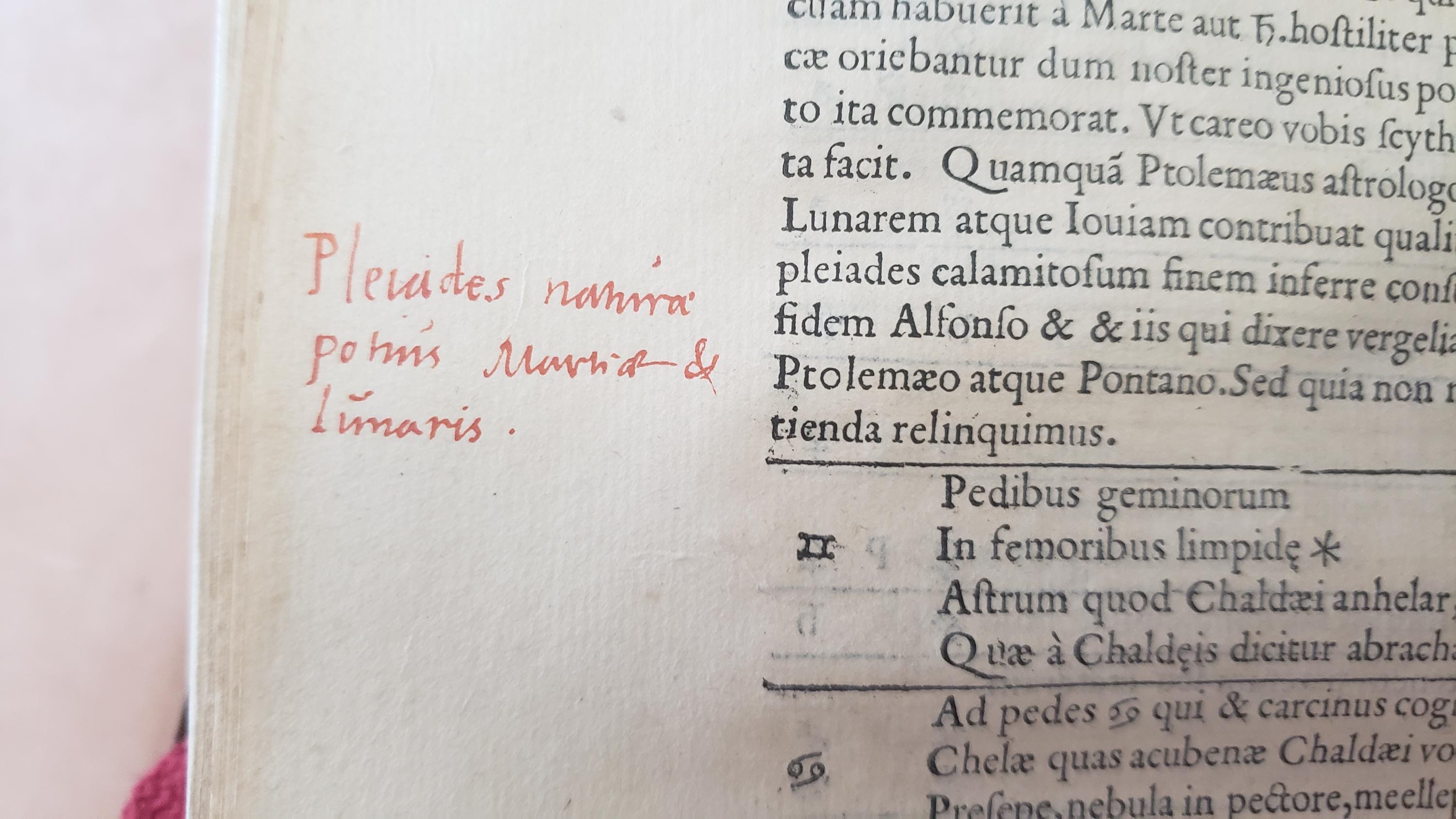
The note on page 210 is more revealing. Here the annotator engages in one of the conflicts of 16th century astronomy, did the Pleiades reflect Jupiter or Mars in their nature?
The marginalia suggests the annotator believed that the Pleiades cause trouble, more reflective of Mars. Printed works from the mid-16th century reveal that this was an argument within astronomical circles (as evidenced here, in the 1545 text).
Regarding the handwriting of the annotations and possible authorship:
The script, style and content place the annotator within the German astronomical circle.
I looked into Caspar Peucer's handwriting, but (especially) the "&" is written entirely different.
Cyprian Leowitz wrote the planetary symbols notably different.
I could not find manuscripts for Rheticus and Jacob Melich. I'd like to look at both. Rheticus, because his teacher, Copernicus, commonly headed things "De...", and wrote with this style of hand. Melich, because he was in this same astronomy circle and is known to have written on the character of the Pleiades.
A.I. is not yet capable (at least, the one I tried to use) of reviewing the scanned online manuscripts and reliably comparing handwriting, focusing on authors with appropriate context. But it is close. I can't help but wonder if finding the authorship of these inscriptions will be easy, soon.
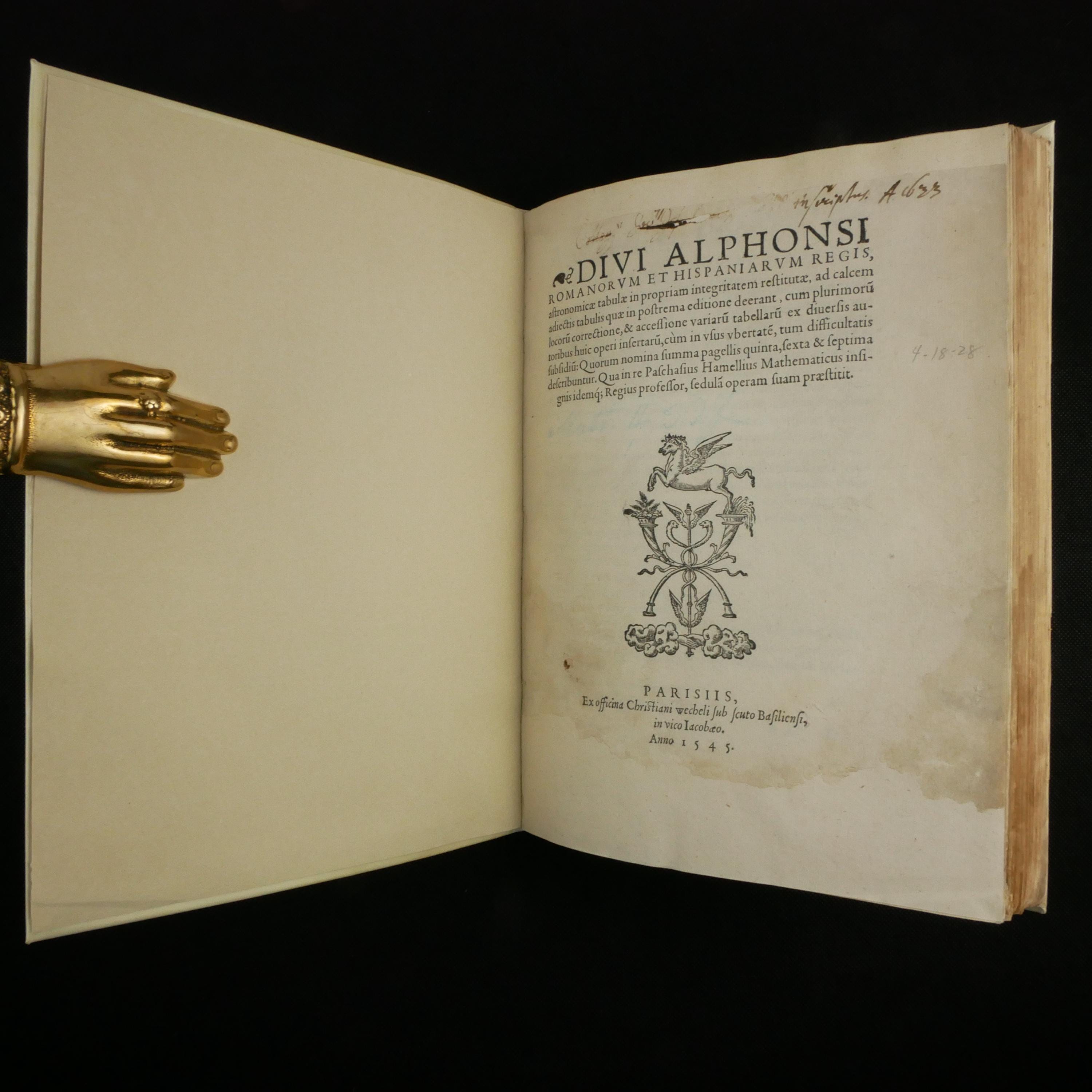
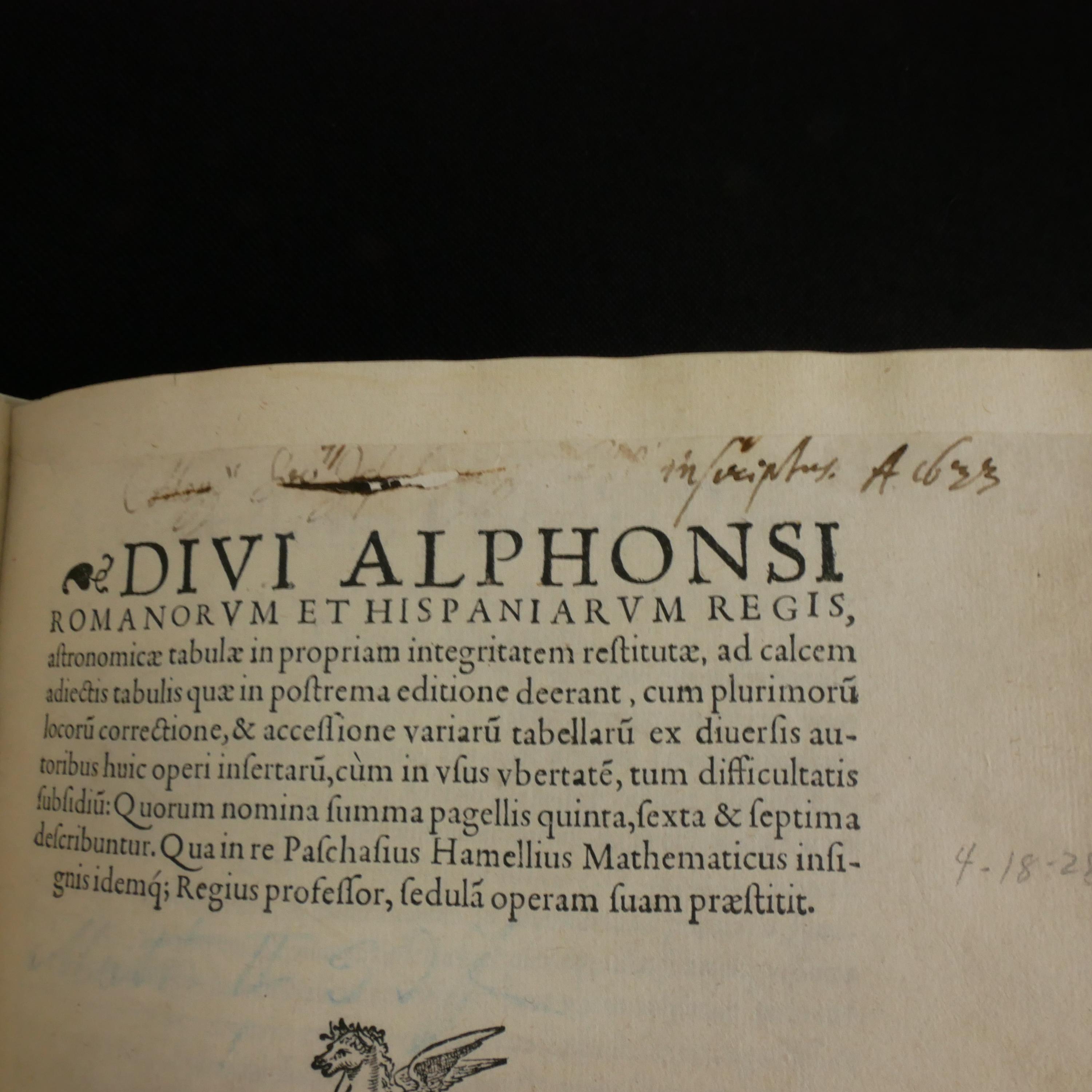
The printed work is a 1545 updating of the Alfonsine Tables, with various accompanying commentary and corrections by various astronomers, edited/compiled by Pascal Duhamel, in 1545, at the Paris Royal College. King Alfonso X, circa 1250, sponsored the creation of the tables, noting where stars and planets should be on specific days; by the mid-16th century, enough time had passed to reveal errors in the 13th century calculations requiring updating and, overall, a reform of the theories of movement.
In 1545, Paris was a hive of dial production and astronomically based science. Oronce Fine was known to be assisting Duhamel in his duties, and under Fine was Mizauld; Mizauld was using the star locations to provide ephemerides to the masses, with the vision that he was bettering the world.
Provenance -
This copy was collected by the noted Harvard astronomer Gingerich, in his search for early astronomical works with ties to important scientists. He left a note, in July 1993, "I really wondered if the writing on the vellum cover and on page 210 could be Reinhold's. The rounded humps on the M and N, and the strokes on 9 seem wrong."
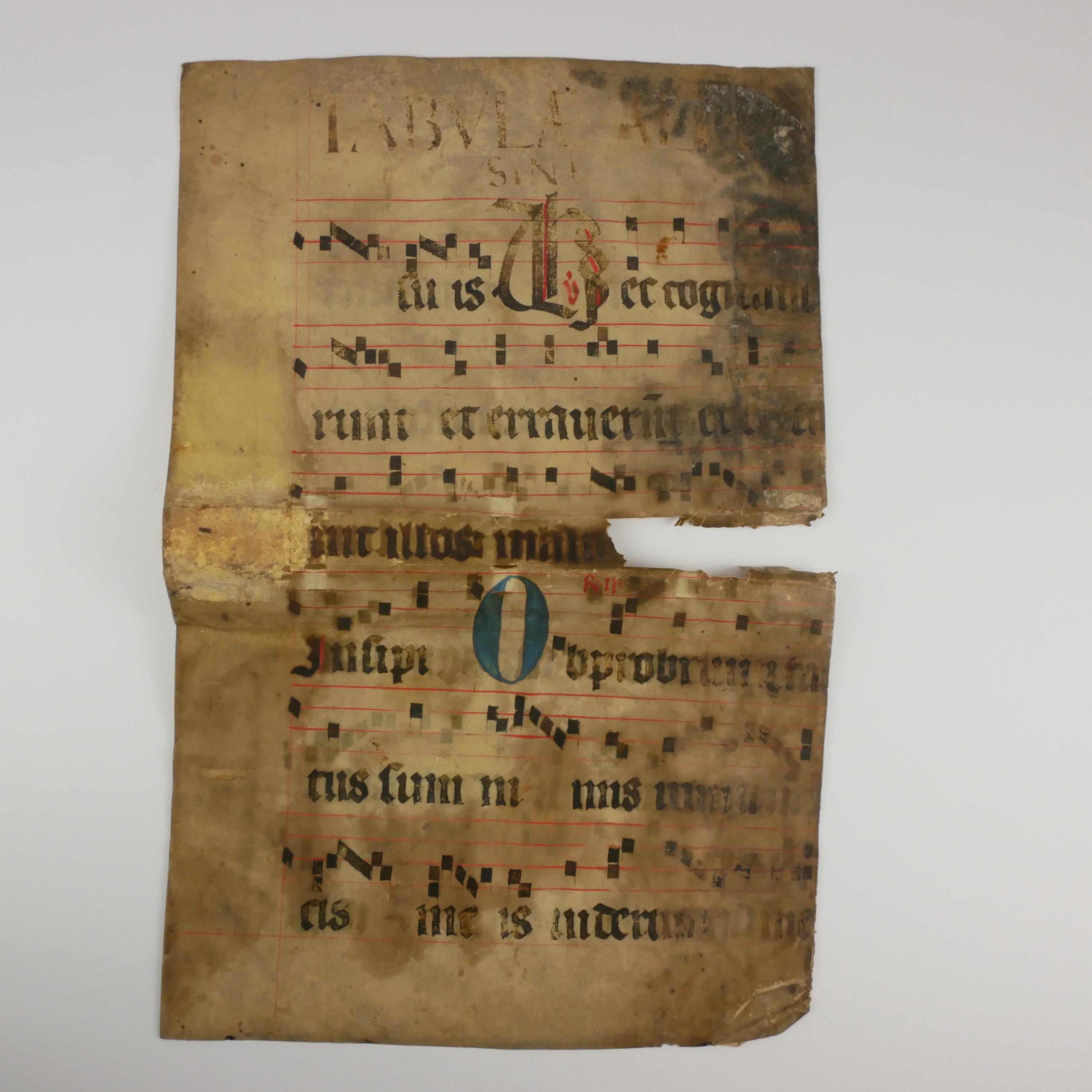
Lastly, the manuscript waste binding that Gingerich (presumably) saved states:
"[...sorte]m mitta mus [inter nos]; ipsi enim homi[ci]d[a]e the[saurizaverunt] sibi ma[la]: [insi]pientes et maligni ode[runt sa]pi[en]ciam et rei fac[ti sunt] ut in cogitacio[nibus su]is. [Hec cogi]taue runt et errauerunt et [ex]ce cauit illos mali cia eo rum. Incipi[entes]. Opprobrium fac tus sum ni mis inimi cis me is ui de runt me."
The first section is drawn from the Catholic book of Wisdom (2:12-21) and says, "Let us cast lots... for these murderers have treasured up evil for themselves: the foolish and malignant have hated wisdom and they became guilty in their thoughts. These things they thought, and were deceived, and their own malice blinded them."
The last section, beginning at Opprobrium, comes from Psalm 31:11, "I am become a reproach among all my enemies... [they who] saw me.."
It's worth noting that Catholic liturgical manuscripts were being re-used as binding material in a Protestant area (circle of Reinhold); it is well-know that many Catholic vellum works were re-used by binders in this period.
Google's A.I. claims that, in liturgical manuscripts, this section of Wisdom placed before the section of Psalms was unique to Eastern (German and Slavic) territories, the more westerly territories using Ecce Vidimus Eum, or In Monte Oliveti instead. I did not verify this info and I do not trust Google's A.I.. But, if A.I. is right, it further supports this book's provenance being German, despite being printed in Paris.
Bibliographic Details -
Universal Short Title Catalogue (USTC) number 149299, 36 copies recorded in the world's libraries. Only one recorded in the U.S., at the Beinecke (Yale).
Pettegree, Walsby, Wilkinson, French Vernacular Books (2007) - reference 52653
Physical Attributes -
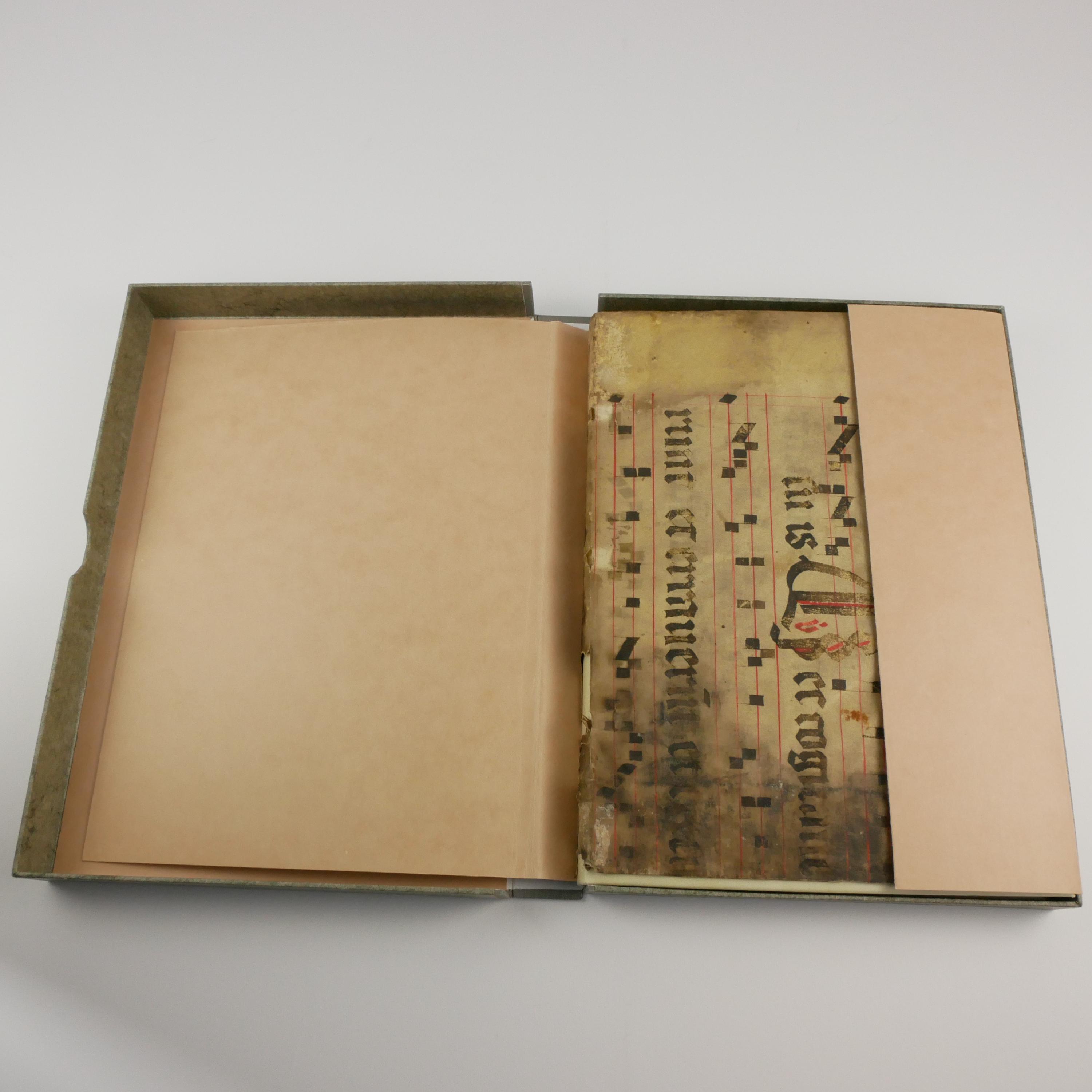
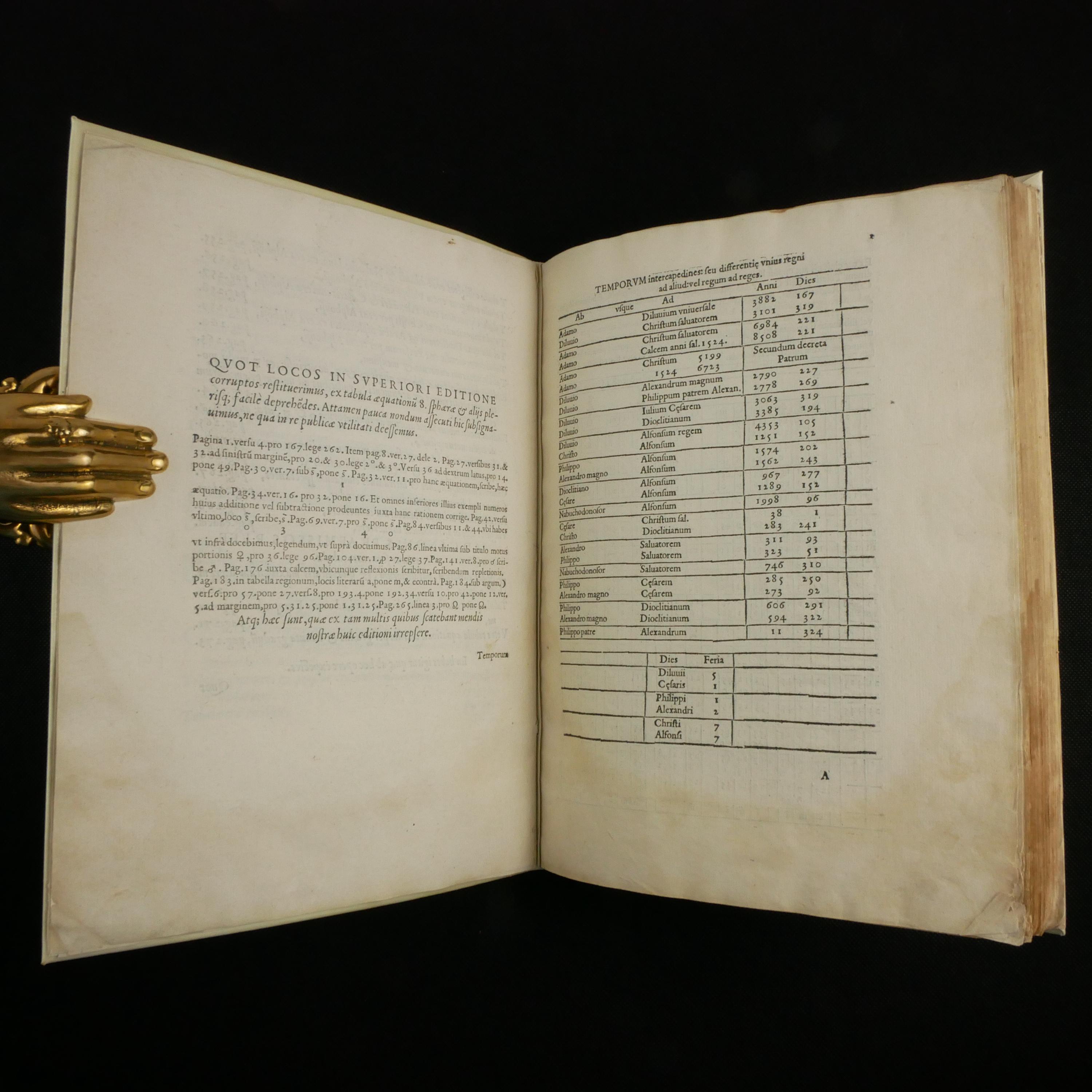
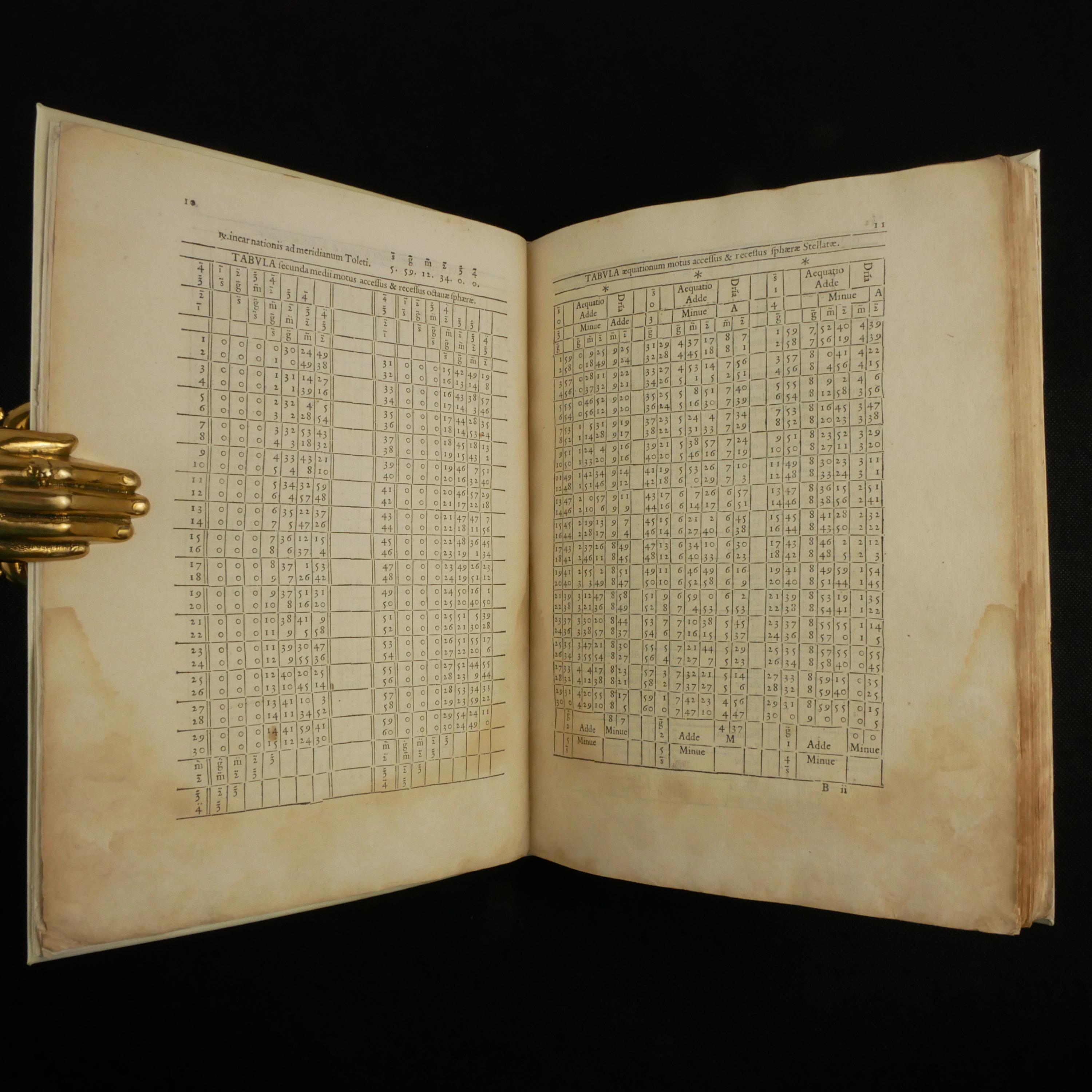
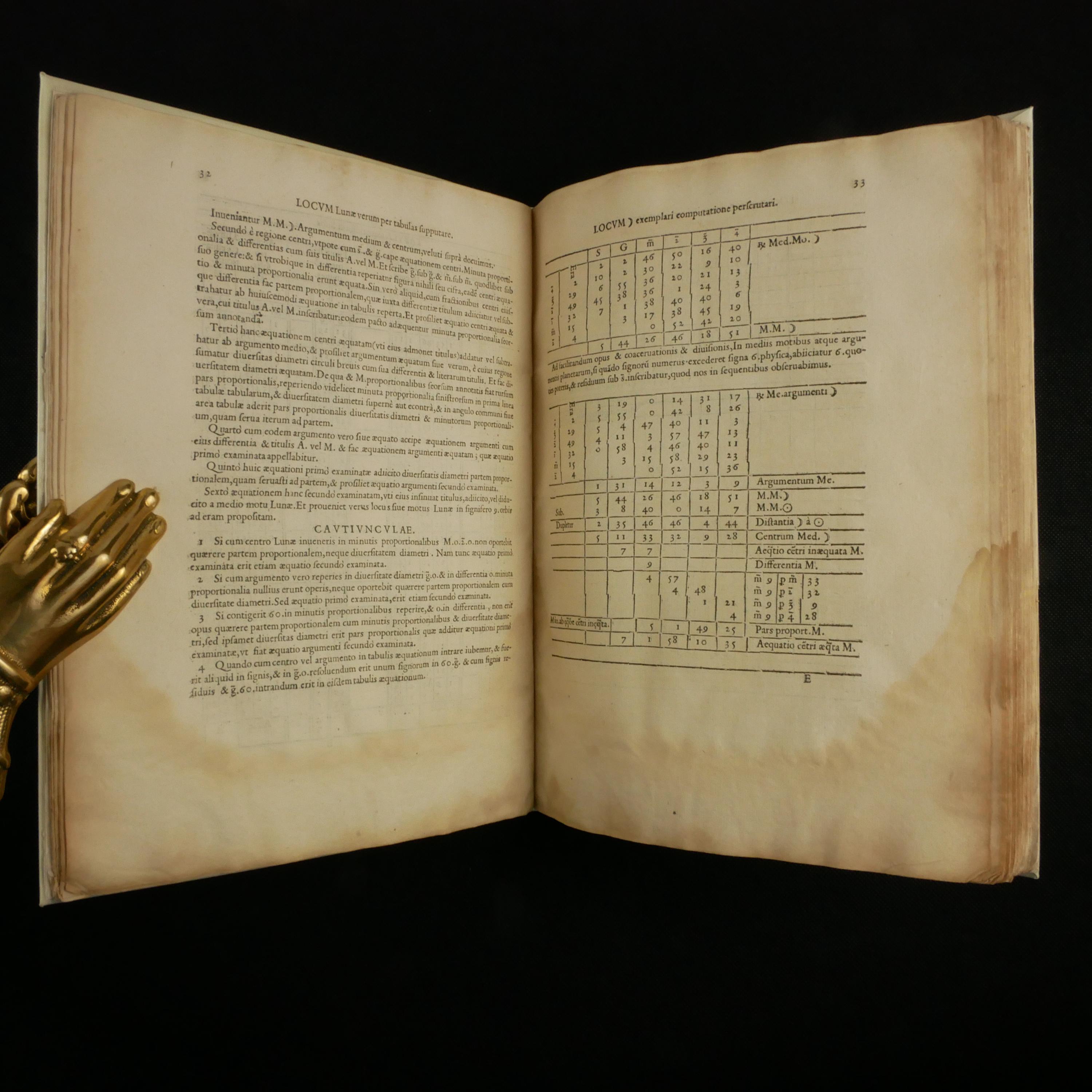
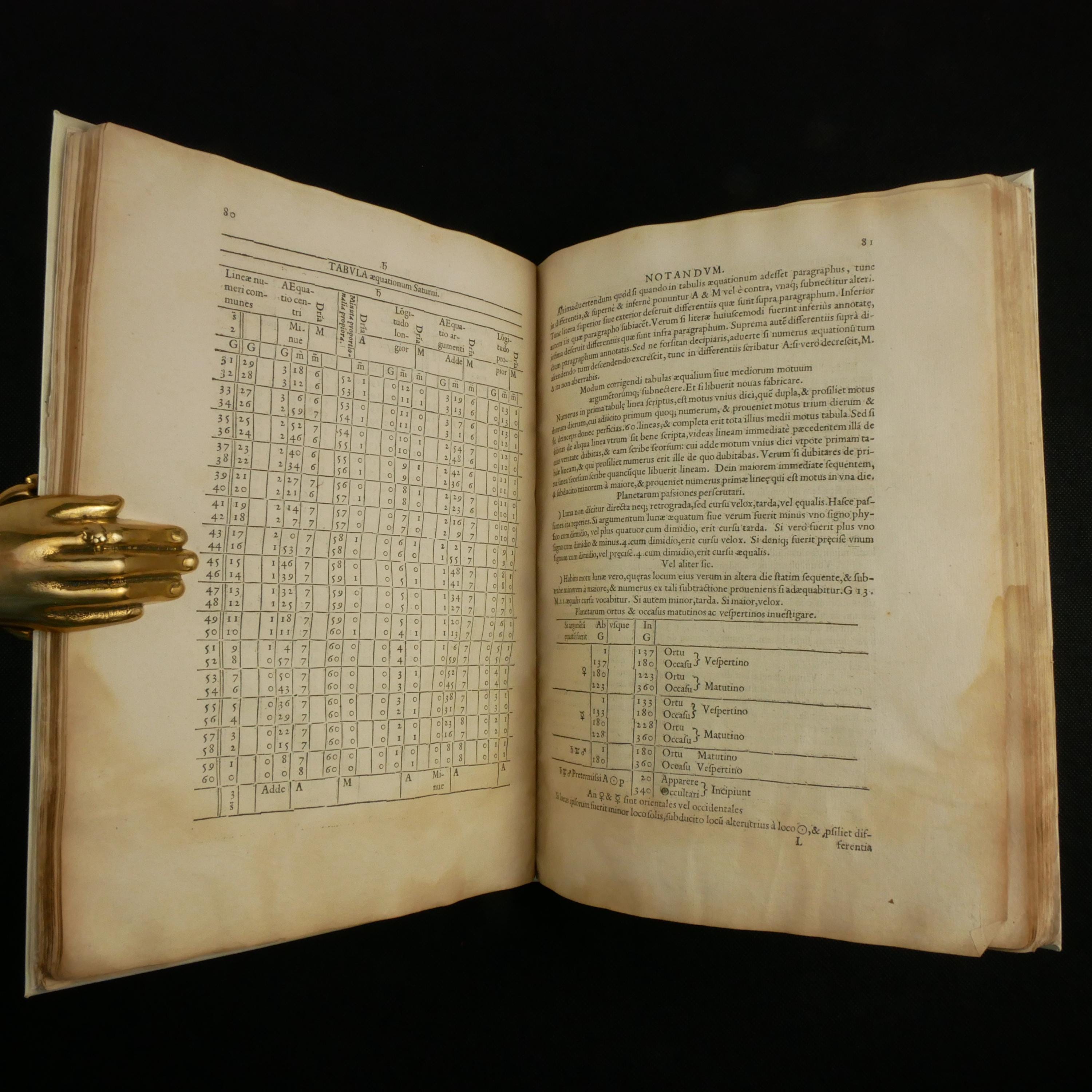
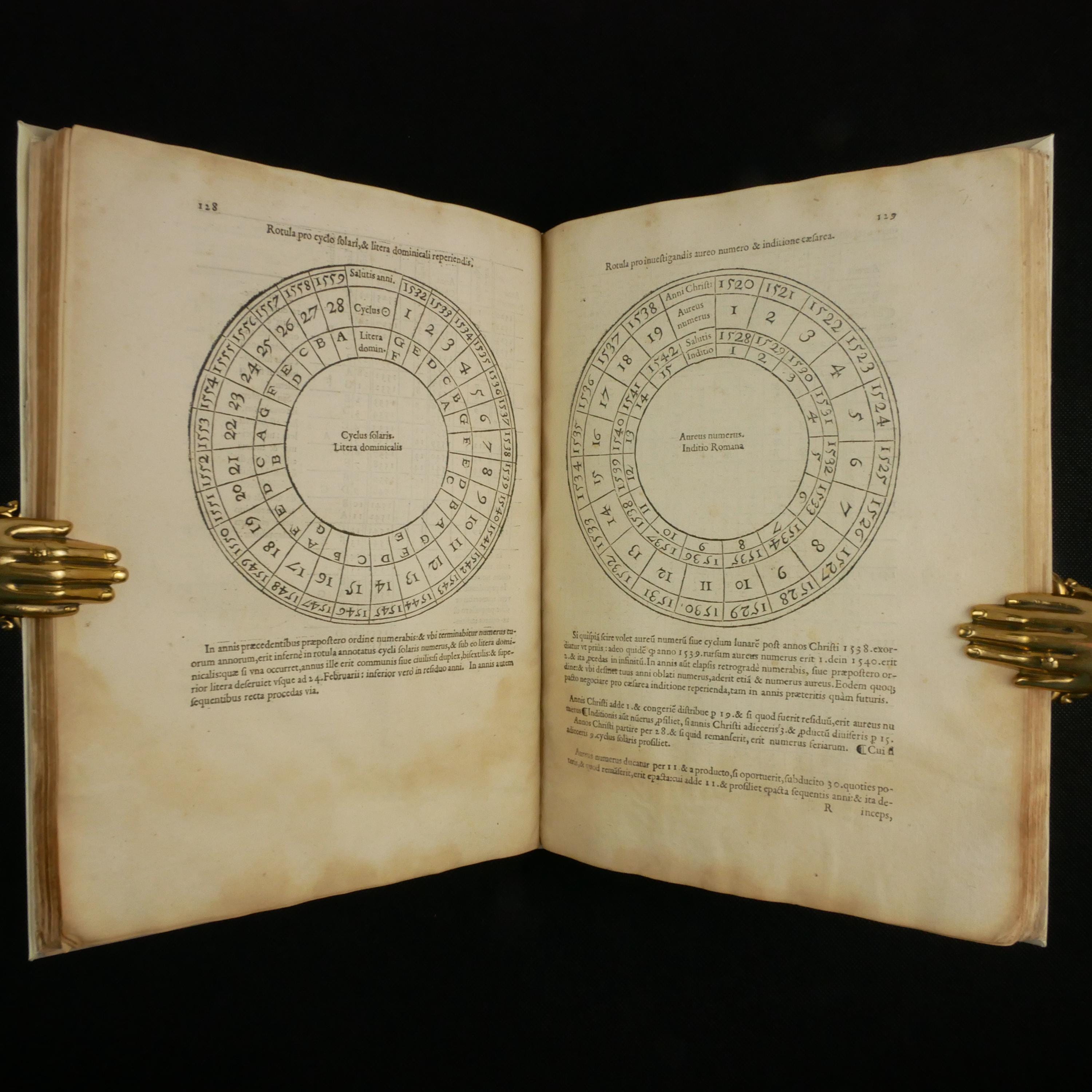
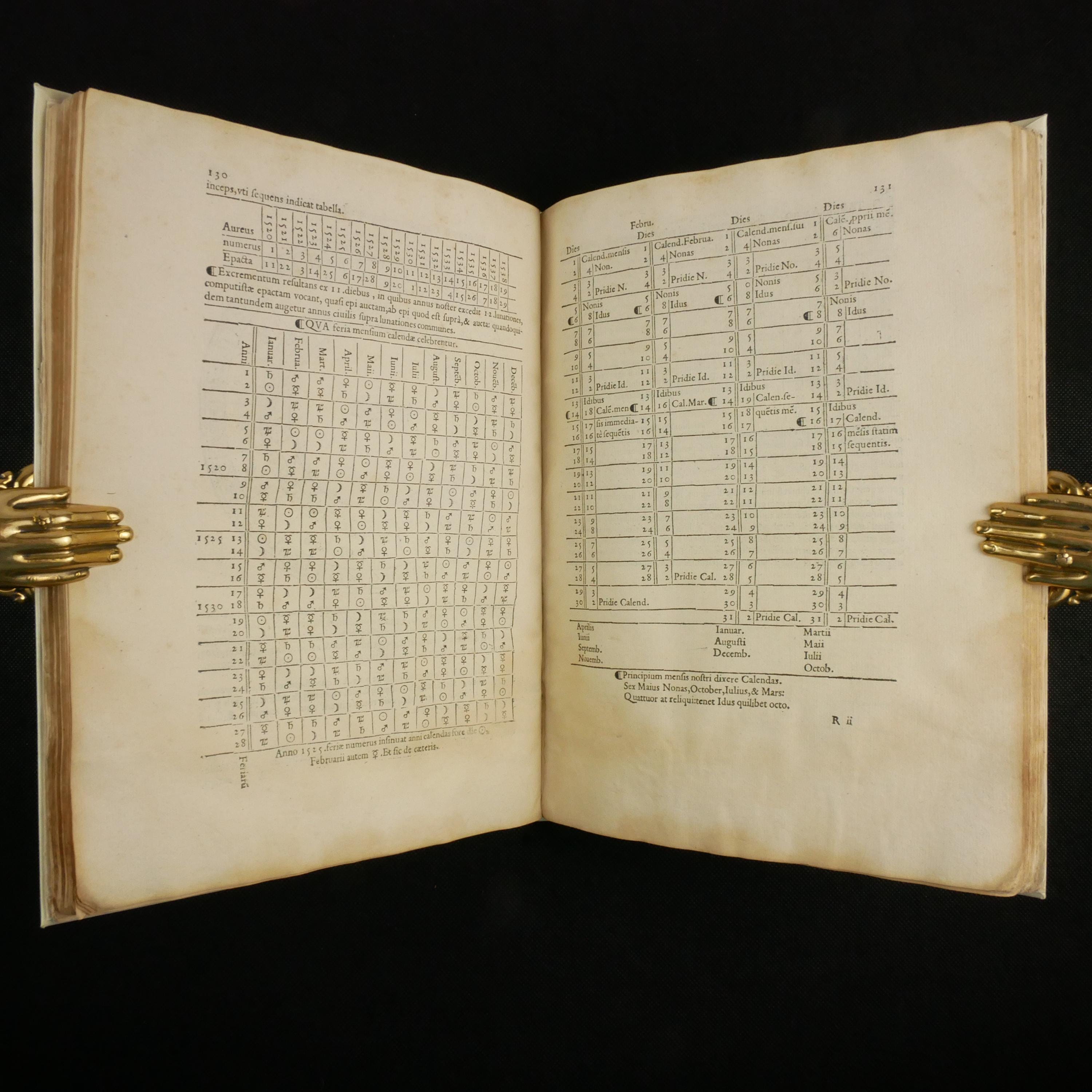
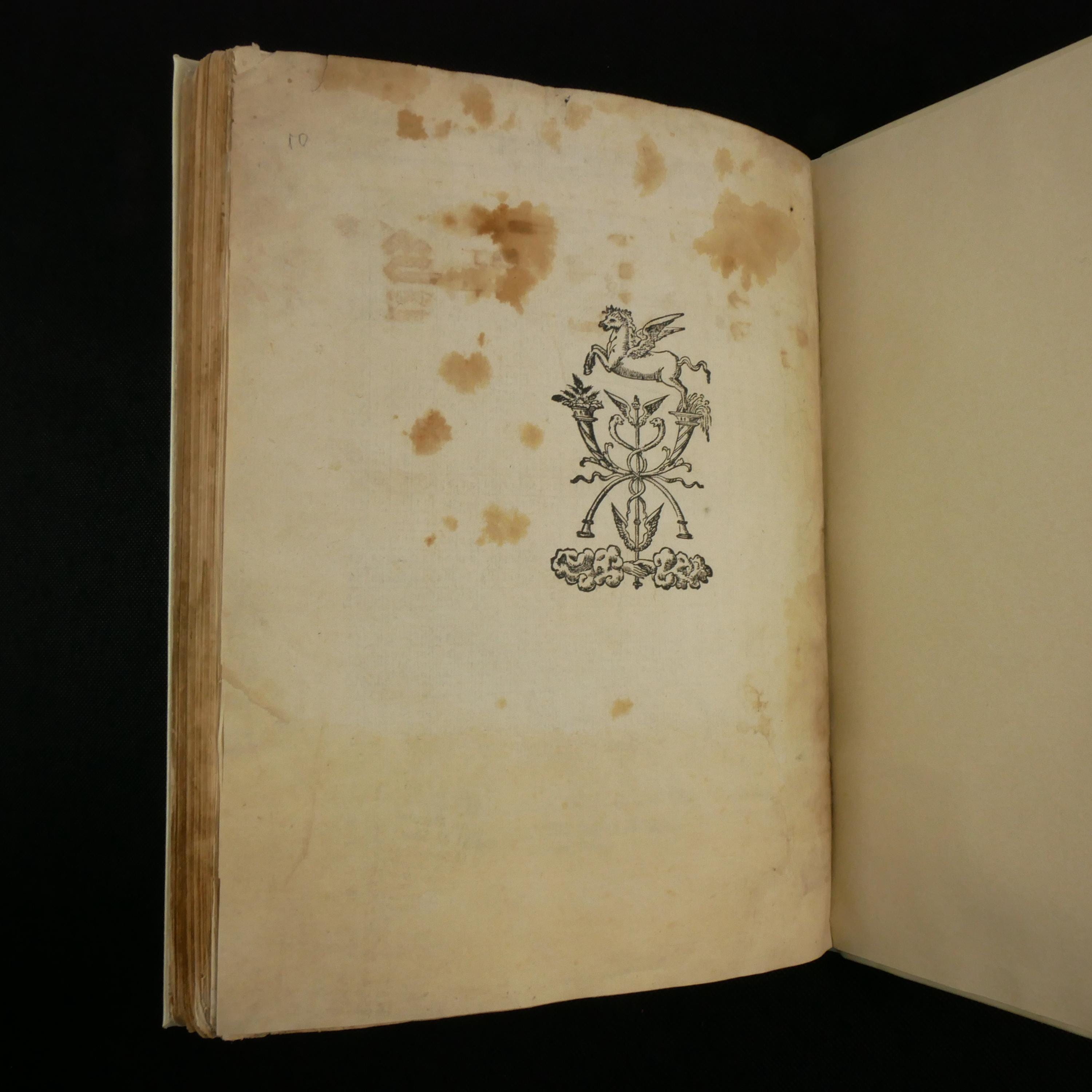
Stored in a protective clamshell. Measures approx. 26 x 19 x 2.5 cm. Fresh vellum binding. Older vellum binding preserved within clamshell. Printer's mark to title page. Tables and two diagrams of dial-like devices.
Pages - viii, 274, [2 - blank, colophon printer's mark]
Collation - a4, A-Z4, AA-KK4, LL6. Collates complete.
Condition -
See pictures. Beautiful fresh binding. Old vellum wrapper preserved with the book, in an archival clamshell box. Binding still somewhat tight. Gingerich placed his ex libris on the pastedown.
Title page restored at top and bottom, and second leaf at bottom edge. 3rd leaf bottom corner repaired.
College inscription from 1623 at top edge of title page, graphite date in fore-edge margin. Entire text block with moisture mark from bottom edge, extending about 4" up fore-edge. Throughout, some toning, thumbing, occasional dog-eared or chipped corner, page edge chip/tear, candle ember mark, stray ink mark, etc. Red note at top of 183 and underlining of title. Red underline and marginal note at 210. Some underlining within "Stellarum Fixarum". Graphite "10" written on colophon.
Shipping from United States
Processing time
1-3 business days
Customs and import taxes
Buyers are responsible for any customs and import taxes that may apply. I'm not responsible for delays due to customs.
Payment Options
Returns & Exchanges
Returns accepted within 14 days
Buyers are responsible for return shipping costs. If the item is not returned in its original condition, the buyer is responsible for any loss in value.
Conditions of return
Buyers are responsible for return shipping costs. If the item is not returned in its original condition, the buyer is responsible for any loss in value.
Privacy policy
We do not collect any private information. For billing, Etsy provides the service. We only receive notice that payment was made. The shipping address is provided to us by Etsy, based on what they buyer submitted during check-out. We do not store these addresses. That is the extent of the information that we receive during a transaction.